🇲🇨Monaco · Places to discover
What to see in Monte-Carlo?
16 places selected by the community - landmarks, nature, hidden restaurants and activities.
Monte-Carlo is not all of Monaco-it's one district in a state the size of a Parisian arrondissement, where residents pay zero tax and Lamborghinis wait at traffic lights. What strikes first is the verticality: buildings that climb the Rock, suspended gardens, human density compressed between sea and mountain. The Casino of Monte-Carlo and the Grand Prix circuit give the place a dual identity, balanced between old European aristocracy and contemporary spectacle.
Three days suffice to understand Monaco without unnecessary expense. Come in spring or autumn-summer is stifling and saturated with tourists. The train from Nice takes 25 minutes and costs mere euros, making a car pointless. Skip restaurants around Casino Place du Casino: prices are inflated and quality doesn't follow. Head instead to the Jardin Exotique for an honest reading of the country's geography.
Landmarks & heritage
1 place
 1Wikipedia · CC BY-SA
Landmark
Casino of Monte-Carlo
Belle Époque masterpiece designed by Charles Garnier, the casino is as beautiful to look at as it is to walk through. Even without playing, the entrance hall and Garnier Room are worth the entry fee.
Museums
2 places
 2Wikipedia · CC BY-SA
Museum
Monaco National Museum – Villa Sauber
Belle Époque villa nestled in a rose garden, dedicated to the performing arts and antique automatons. Overlooked by hurried tourists, it is a haven of culture steps from the beach.
 3Wikipedia · CC BY-SA
Museum
Musée Océanographique de Monaco
Founded by Prince Albert I in 1910, this temple to the sea perched on the Rock is one of Europe's largest aquariums. Jacques-Yves Cousteau served as its director – the institution breathes maritime history.
Religious sites
2 places
 4Wikipedia · CC BY-SA
Religious site
St Nicholas Cathedral, Monaco
Neo-Romanesque cathedral in white stone from La Turbie, housing the tomb of Grace Kelly and the Monegasque princes. Sober and moving, far from the bustle of the casino.
 5Wikipedia · CC BY-SA
Religious site
Chapelle de la Miséricorde
Small 17th-century Baroque chapel on the Rock, seat of the Confraternity of Mercy. Discreet and contemplative, it contrasts with the princely splendour surrounding it.
Castles & fortresses
2 places
 6Wikipedia · CC BY-SA
Castle
Palais Princier de Monaco
Official residence of the Prince of Monaco since the 13th century, dominating the Rock. The changing of the guard at 11:55 is a daily authentic ritual, and the State Apartments are worth visiting in summer.
- 7
Castle
Castle
Fort Antoine
18th-century fortress transformed into an open-air theatre in summer, offering an unobstructed view of Monaco harbour. An intimate concert venue that locals love.
Parks & gardens
2 places
 8Wikipedia · CC BY-SA
Park
Saint-Martin Gardens
Shaded promenade running along the Rock above the Mediterranean, dotted with statues and benches facing the sea. The favourite spot of Monégasques for a midday break.
- 9
Park
Park
Garden of Little Africa
Discreet suspended garden between Monaco-Ville and Fontvieille, planted with palms and tropical plants. Clear view of Fontvieille harbour and the hills – a green corner missed by standard tours.
Viewpoints
1 place
 10Wikipedia · CC BY-SA
Viewpoint
Port Hercule – Quai des États-Unis
The beating heart of Monaco, where giant yachts rub shoulders with fishing boats. Strolling along the quay early in the morning, coffee in hand, reveals the true face of the principality before tourist crowds arrive.
Activities
4 places
- 11
Activity
Activity
Condamine Market
The true market of Monégasques, open every morning, with local producers, cheeses and fresh socca. Best visited before 9am to see the chefs from the finest restaurants doing their shopping.
 12Wikipedia · CC BY-SA
Activity
Grimaldi Forum
Cultural and conference centre hosting major international temporary exhibitions, with bold architecture on the seafront. Monégasques frequent it regularly for its eclectic programming.
 13Wikipedia · CC BY-SA
Activity
Collection of Historic Cars – Fontvieille
Museum housing over 100 vehicles from the personal collection of the Princes of Monaco, from the earliest automobiles to Formula 1 cars. Fascinating even for the uninitiated, and often less crowded than the Oceanographic Museum.
 14Wikipedia · CC BY-SA
Activity
Monte-Carlo Opera – Salle Garnier
Opera house designed by Charles Garnier in 1879, more intimate than its Parisian counterpart yet equally sumptuous. The lyrical programming is of the highest calibre – the balcony seats offer the finest acoustics.
Beaches
1 place
 15Wikipedia · CC BY-SA
Beach
Larvotto Beach
Monaco's only public beach, with a zone of fine sand and a protected marine reserve ideal for snorkelling. Less crowded early in the morning, with a direct view of Fontvieille's high-rises.
More to discover
1 place
 16Wikipedia · CC BY-SA
Place
Monaco Rock – Ruelle du Rocher
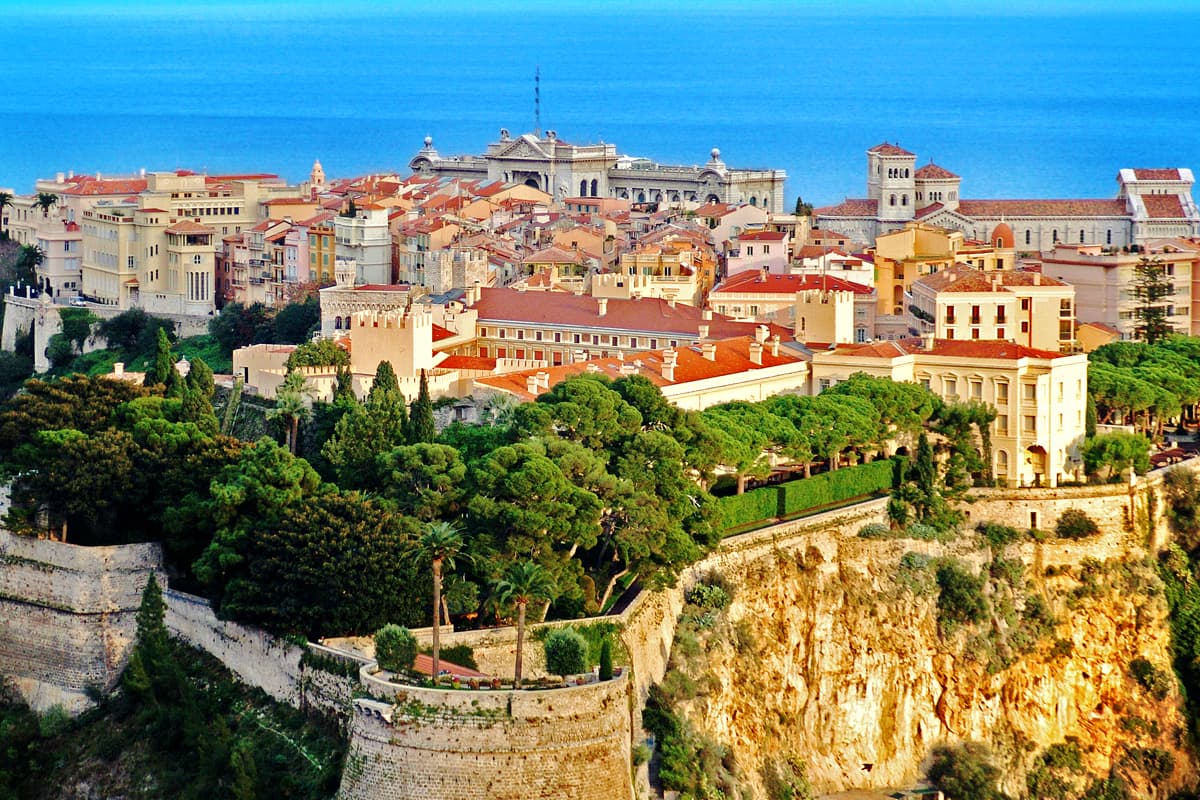
Network of medieval alleyways in Monaco-Ville, virtually deserted outside peak tourist hours. Getting lost here at dawn or dusk reveals the atmosphere of a timeless city-state.