🇵🇱Poland · Places to discover
What to see in Krakow?
23 places selected by the community - landmarks, nature, hidden restaurants and activities.
Cracovie is an anomaly in Central Europe: it passed through the twentieth century without being razed. The medieval centre, Główny Market Square and Wawel Castle form a coherent ensemble that war failed to fragment. The city also carries the weight of Auschwitz-Birkenau, 70 kilometres away, and this proximity shapes how residents speak of their own history.
Spring and early autumn offer genuine comfort without the summer saturation. Two days suffice for the centre; three if you venture to Auschwitz or the Jewish quarter of Kazimierz. Trams cover most of the city and the old town is pedestrianised. Avoid the horse-drawn carriages around Rynek Główny: they're expensive, poorly regulated, and there are better ways to understand the city.
Landmarks & heritage
5 places
 1Wikimedia Commons · CC BY-SA 4.0
Landmark
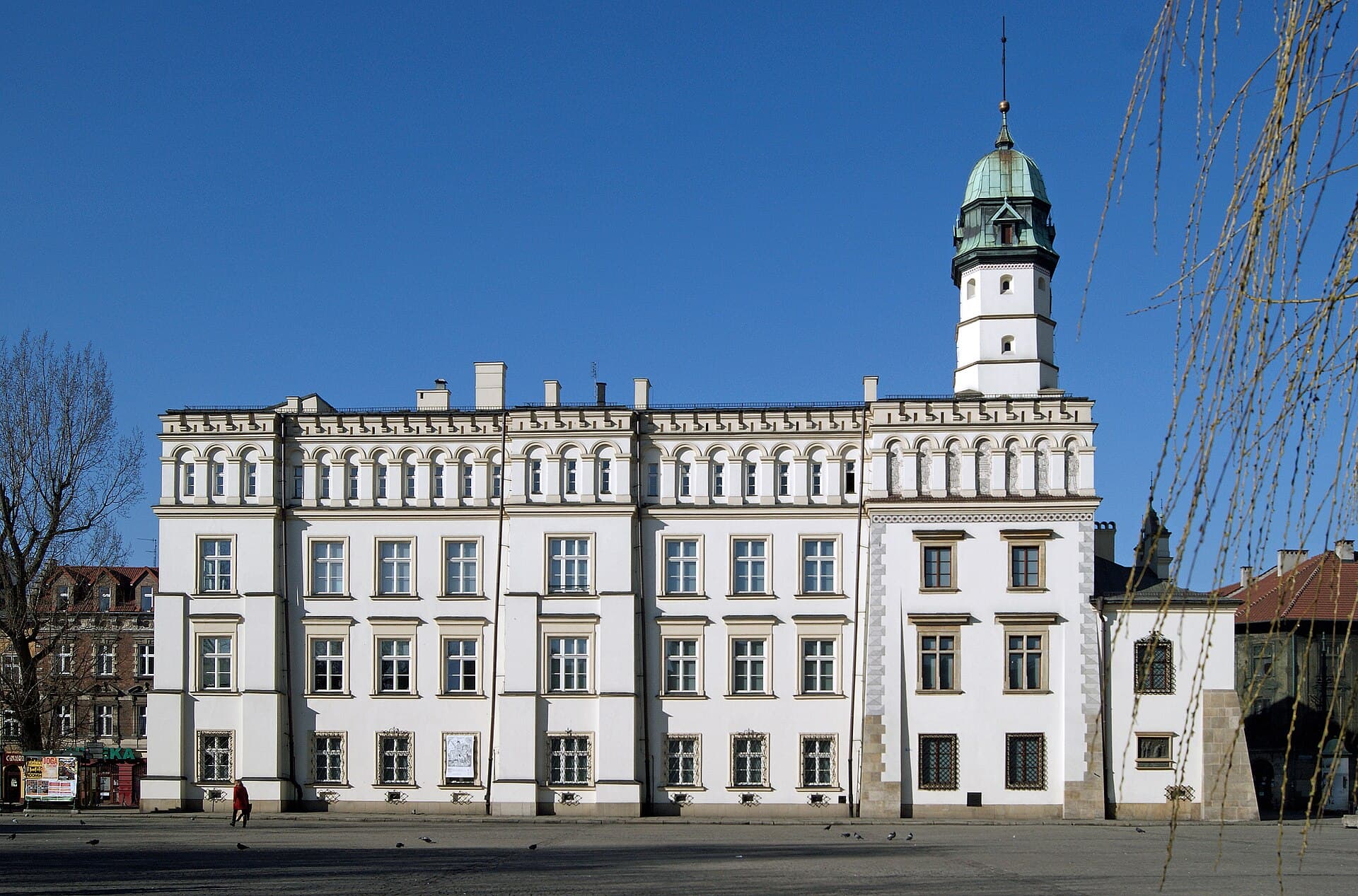
Kazimierz Quarter
A former Jewish quarter that has become the bohemian heart of Kraków, with its synagogues, vintage cafés and art galleries. Nowy Square in the evening is the real spot for locals.
 2Wikimedia Commons
Landmark
Kraków Barbican
A circular Gothic bastion from the 15th century, one of the few preserved examples in Europe. It connects the old town via Saint Florian's Gate through an intact medieval corridor.
- 3
Landmark
Landmark
Podgórze District – Ghetto Heroes Square
Former central square of Cracow's Jewish ghetto, with the memorial of 68 chairs symbolising the deported. District undergoing gentrification, with an authentic emerging artistic scene.
- 4
Landmark
Landmark
Hall of Cloth (Sukiennice)
Renaissance covered market in the heart of the Rynek, selling amber, jewellery and artisanal souvenirs since the 14th century. Upstairs, a gallery of 19th-century Polish painting often overlooked by tourists.
- 5
Landmark
Landmark
Cracow Market Square (Rynek Główny)
One of Europe's largest medieval squares, animated at all hours. Avoid the restaurants on the central terrace – instead wander and observe the pigeons and carriages.
Museums
3 places
 6Wikimedia Commons · CC BY-SA 3.0
Museum
MOCAK – Kraków Museum of Contemporary Art
A contemporary art museum installed in the former warehouses of the Schindler factory, with temporary exhibitions of international calibre. Free entry on Tuesdays—a favourite spot for fine arts students.
 7Wikimedia Commons · CC BY-SA 3.0
Museum
Oskar Schindler Factory Museum (Fabryka Schindlera)
Immersive museum on the Nazi occupation of Cracow housed in Schindler's actual factory. One of Europe's best-designed historical museums – allow minimum 2 hours.
- 8
Museum
Museum
National Museum in Kraków - Main Gallery
The national museum houses the largest collection of Polish art in the country, including the famous painting by Matejko 'The Battle of Grunwald'. A museum that locals genuinely frequent.
Religious sites
4 places
 9Wikimedia Commons · CC BY-SA 4.0
Religious site
Church of Saints Peter and Paul
Poland's first Baroque building, featuring twelve apostles as statues on its façade. The austere interior contrasts with the usual ornamental richness of Baroque architecture—a lesson in architectural design.
 10Wikimedia Commons · CC BY-SA 4.0
Religious site
Church of Saint Adalbert
The oldest church in Kraków dating from the 10th century, tiny and often overlooked amid the bustling Rynek. Visible archaeological excavations in the basement reveal the city's layered history.
 11Wikimedia Commons · CC BY-SA 4.0
Religious site
Wawel Cathedral
Necropolis of Polish kings and heroes, featuring the Sigismond Chapel with its distinctive golden dome unique in Central Europe. Climb Sigismond Tower to see the Zygmunt bell up close.
 12Wikimedia Commons · CC BY-SA 4.0
Religious site
Remuh Synagogue and Cemetery
Renaissance synagogue still in use, with a 16th-century cemetery partially preserved. The tombstones reassembled into a wall after the war create a unique atmosphere.
Castles & fortresses
1 place
 13Wikimedia Commons · CC BY-SA 4.0
Castle
Wawel Royal Castle
The residence of Polish kings perched on a limestone hill overlooking the Vistula. The royal treasury and Gothic cathedral are as worthwhile as the views over the city.
Nature
3 places
 14Wikimedia Commons · CC BY 3.0
Nature
Las Wolski – Wolski Forest
Urban forest of 400 hectares to the west of the city, with marked trails, Cracow Zoo and the Camaldules Monastery perched on a hill. Natural escape 20 minutes from the centre.
- 15
Nature
Nature
Vistula Riverbanks (Bulwary Wiślane)
Developed promenade along the river, much frequented by locals for jogging, cycling and picnics. The moored barge-bars on the Kazimierz side are the soul of Cracow summers.
- 16
Nature
Nature
Planty - Green Promenade around the Old Town
A 4 km belt of public gardens replacing the old fortifications dismantled in the 19th century. The complete circuit on foot takes 45 minutes and offers unusual angles on the monuments.
Parks & gardens
1 place
- 17
Park
Park
Jordan Park (Park im. Henryka Jordana)
Europe's first scientific play park (1889), still thriving with its shaded pathways and sports grounds. A relaxation spot away from the tourist circuit.
Viewpoints
3 places
 18Wikimedia Commons · CC BY-SA 4.0
Viewpoint
Kościuszko Mound
An artificial earthwork raised in 1823 in honour of the national hero, offering the best 360° panorama over Kraków and its surroundings. The climb on foot takes 20 minutes from the tram stop.
- 19
Viewpoint
Viewpoint
Viewpoint from Town Hall Tower
The sole remnant of the old town hall demolished in 1820, this Gothic tower offers sweeping views over the Rynek. Less famous than Wawel, the climb of 70 steps is well worth the effort.
- 20
Viewpoint
Viewpoint
View from Krakus Mound
A legendary earthwork from the 7th century attributed to the mythical founder of the city, located in the popular Podgórze neighbourhood. Clear view of Wawel from the opposite bank—an angle few visitors experience.
More to discover
3 places
 21Wikimedia Commons · CC BY-SA 4.0
Place
Jagiellonian Library (Biblioteka Jagiellońska)
One of Poland's largest libraries, founded in the 14th century with the university. The modernist building from the 1930s houses treasures such as the Behaim globe and illuminated manuscripts.
 22Wikimedia Commons · CC BY-SA 2.0
Place
Dragon's Cave (Smocza Jama)
Natural cave 270 metres beneath Wawel, linked to the legend of Kraków's dragon. At the exit, a dragon sculpture breathes fire every few minutes – unironic kitsch beloved by locals.
 23Wikimedia Commons · CC BY-SA 4.0
Place
Nowy Square in Kazimierz
A former Jewish market square converted into a night-time hotspot with zapiekanka bars (Polish filled baguettes) in the central rotunda. The best street food in Kraków for under €3.
Also 🇵🇱 in Poland