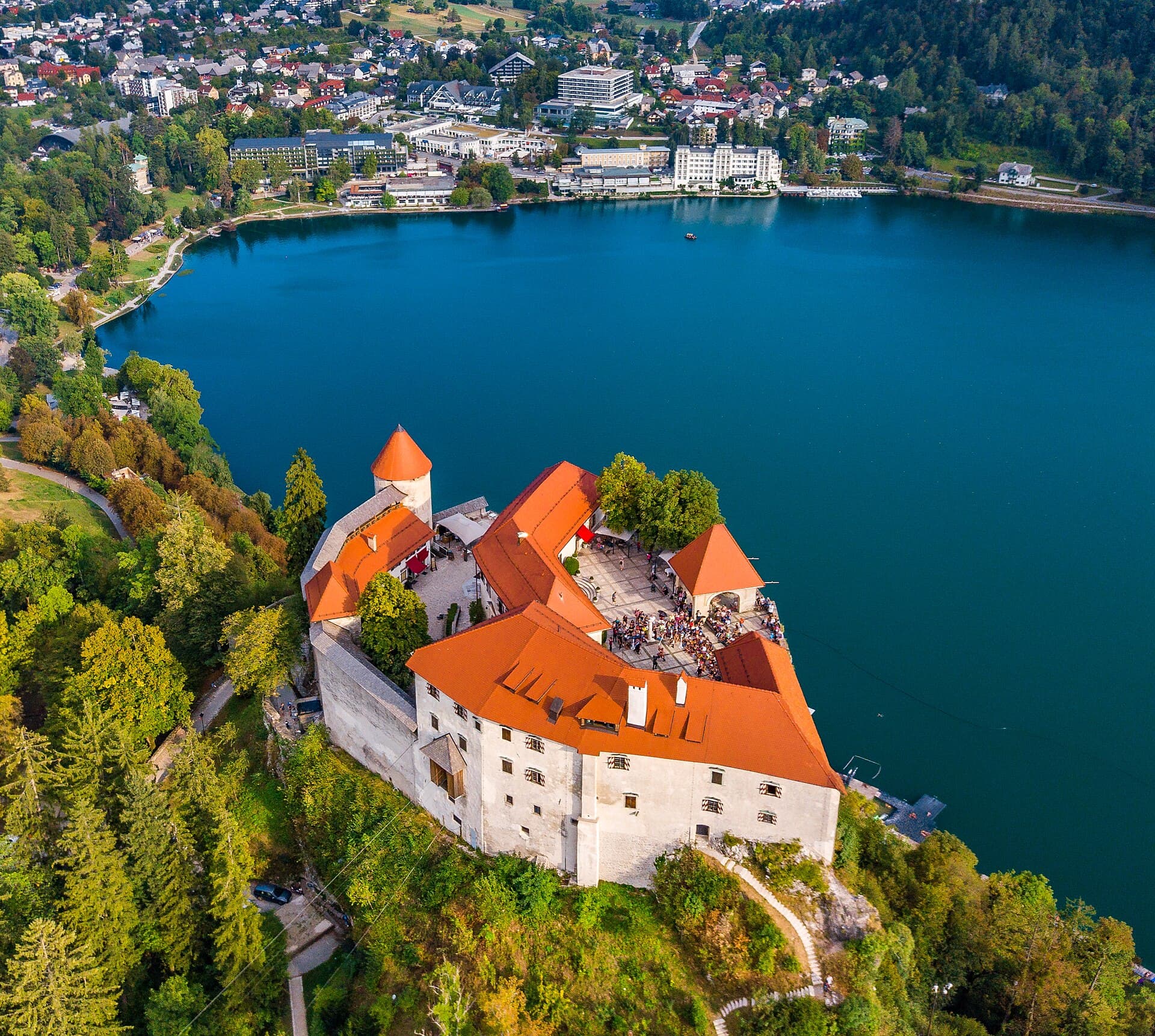
🇸🇮Slovenia · Places to discover
What to see in Ljubljana?
24 places selected by the community - landmarks, nature, hidden restaurants and activities.
Ljubljana operates at a human scale rare for a European capital: 300,000 inhabitants, a pedestrian centre crossed by the Ljubljanica, and a medieval castle watching over everything from its hill. The city long lived in the shadow of Vienna and Zagreb, which spared it mass tourism and preserved real neighbourhood life, particularly around the central Pogačar market.
Spring and early autumn offer the best conditions: summer draws groups that saturate the old town within hours. Two days are enough to see the essentials, but three allow you to explore the surroundings. Public transport is efficient from the central station, and bicycles remain the most sensible way around the city. Avoid restaurants around the Dragon Bridge: prices are inflated for no particular reason.
Landmarks & heritage
5 places
 1Wikimedia Commons
Landmark
Congress Square (Kongresni trg)
Spacious neoclassical square surrounded by the University, Philharmonic Hall and Zvezda Park. The institutional and social heart of Ljubljana, often animated by markets and local cultural events.
 2Wikimedia Commons · CC BY 2.0
Landmark
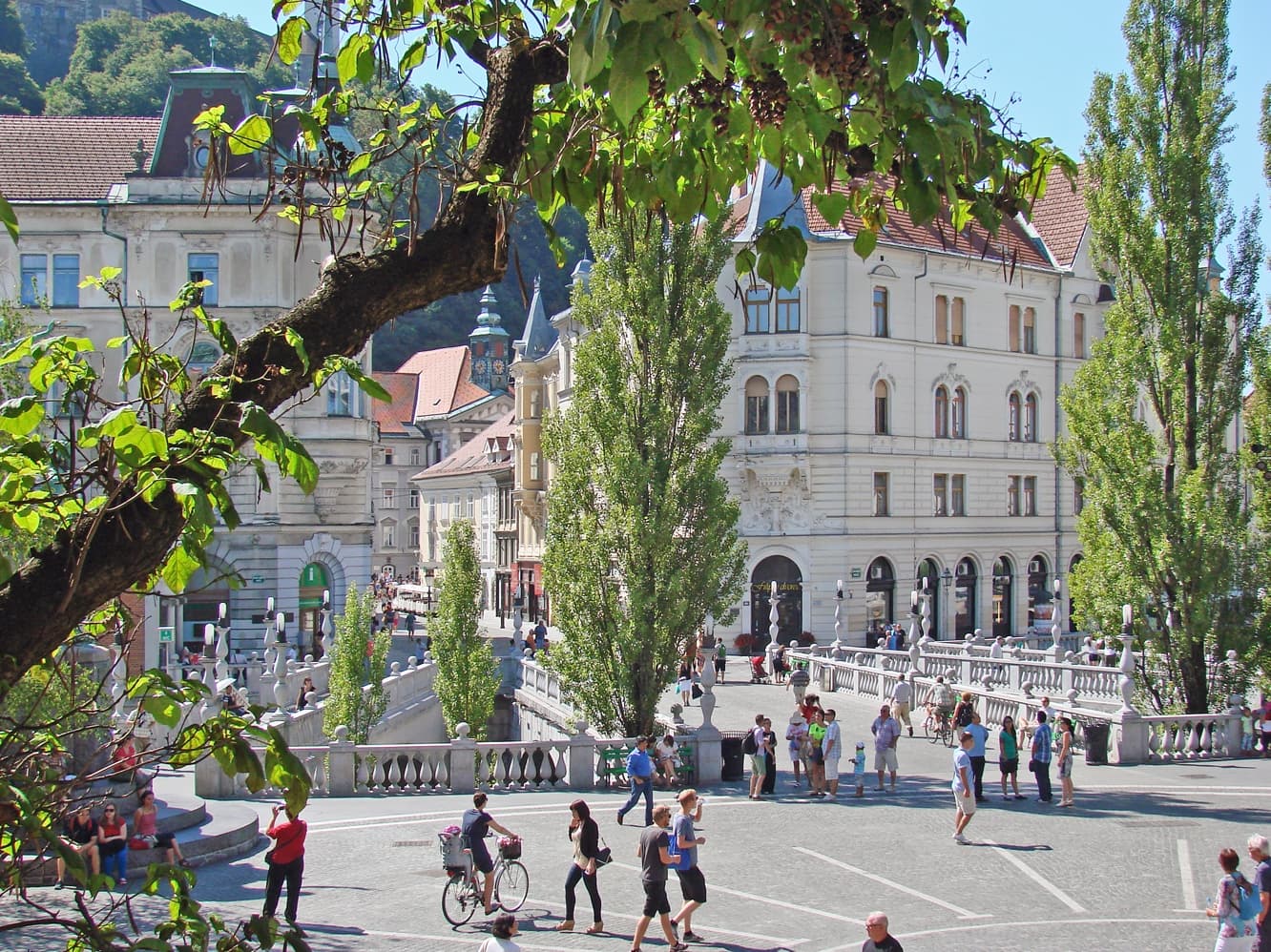
Triple Bridge (Tromostovje)
Unique architectural ensemble designed by Jože Plečnik in the 1930s, connecting Prešeren Square to the old town. In the evening, the street lamps and reflections in the Ljubljanica create one of the city's most beautiful urban scenes.
 3Wikimedia Commons
Landmark
Robba Fountain
Baroque masterpiece by Francesco Robba (1751) representing three rivers of Carniola, inspired by Bernini's Fountain of the Four Rivers in Rome. The original is preserved in the National Gallery – the square features a faithful copy.
 4Wikimedia Commons
Landmark
Jože Plečnik House-Workshop
Museum dwelling of the architect who redesigned Ljubljana in the 1920s–1950s, designated a UNESCO World Heritage site in 2021. The workshop, circular garden and personal objects provide access to the mental universe of a discreet and profoundly local genius.
- 5
Landmark
Landmark
National and University Library (NUK)
An absolute masterpiece by Jože Plečnik (1941), built in red brick and ashlar. The interior black marble staircase transitioning from darkness to light is an architectural metaphor for knowledge – ask to enter even if you are not a student.
Museums
3 places
 6Wikimedia Commons · CC BY 2.0
Museum
National Gallery of Slovenia
Permanent collection of Slovenian painting and sculpture from the Middle Ages to the 20th century, including the original Robba Fountain. The building itself, with its glazed passage between two wings, is worth the visit.
 7Wikimedia Commons
Museum
National Museum of Slovenia
The country's oldest museum (1821), housing the 60,000-year-old bear bone flute – the oldest musical instrument ever discovered. The Roman and Celtic collections are remarkably well documented.
- 8
Museum
Museum
Museum of Modern Art Ljubljana (MGLC)
Permanent collection of 20th-century Slovenian art in a restrained modernist building. Temporary exhibitions regularly showcase artists from the contemporary East European scene, often overlooked by mainstream circuits.
Religious sites
2 places
 9Wikimedia Commons
Religious site
Ljubljana Cathedral of St Nicholas
Baroque cathedral of the 18th century with spectacular bronze doors depicting the history of Christianity in Slovenia. The interior with frescoes by Giulio Quaglio possesses a richness often overlooked by rushed visitors.
- 10
Religious site
Religious site
Trnovo Quarter – Church and Canal
Bohemian quarter south of the old town, with its canal crossed by small bridges and the Plečnik Church of St John the Baptist. This is where Plečnik lived – his house-studio is now an intimate, rarely visited museum.
Castles & fortresses
2 places
 11Wikimedia Commons · CC BY-SA 4.0
Castle
Ljubljana Castle
Medieval fortress dominating the old town from castle hill. The watchtower offers a 360° panorama of the city and the Julian Alps on clear days. Walk up via the forest path rather than the funicular to enjoy the view gradually.
- 12
Castle
Castle
Castle Hill – Forest Trail
Network of wooded trails climbing to the castle from the Krakovo neighbourhood offers immersion in forest five minutes' walk from the centre. In spring, flowering alders and chestnuts create an almost mountainous atmosphere.
Nature
2 places
- 13
Nature
Nature
Ljubljana Marsh (Ljubljansko barje)
Prehistoric wetland designated as a World Heritage site, just ten minutes from the city centre. Neolithic pile dwellings and giant water lilies coexist with cycle paths. At sunset, the reflections of the Alps on the water are striking.
- 14
Nature
Nature
Ljubljanica Embankment – Gallusovo nabrežje Quay
The stretch of riverbank between the Triple Bridge and the market is Ljubljana's open-air living room: café terraces, moored boats, street musicians. In the evening, it's where everyone meets for Slovenian aperitivo.
Parks & gardens
2 places
- 15
Park
Park
Rožnik Park and Šišenski hrib Hill
Urban forest west of Tivoli with several marked trails leading to viewpoints over the city and the Alps. The Rožnik brewery at the summit serves local beer in an authentic forest beer garden setting.
- 16
Park
Park
Tivoli Park
Five-square-kilometre green lung in the city centre, connected to the Jakopič promenade lined with large exhibition photographs. Locals run, picnic and play chess at weekends – a place to see local life, not tourists.
Viewpoints
4 places
 17Wikimedia Commons · CC BY-SA 4.0
Viewpoint
Castle Watchtower – Julian Alps Panorama
On clear days, from the platform of the medieval tower, you can distinguish Triglav (2,864 m) and the Julian Alps to the north-west. A unique view that reminds you Ljubljana is a mountain city disguised as a capital.
 18Wikimedia Commons
Viewpoint
Nebotičnik Bar Terrace
Bar on the 12th floor of Ljubljana's first skyscraper (1933), with a terrace offering 360° views over the red roofs of the old town and the mountains. Less known than the castle, far more pleasant with a drink in hand.
- 19
Viewpoint
Viewpoint
Žale – Ljubljana Central Cemetery
Monumental necropolis designed by Plečnik (1940), considered one of his masterpieces. The porticoes, chapels and gardens make it a serene place for walking that Slovenians frequent like a park – a unique cultural experience.
- 20
Viewpoint
Viewpoint
Krakovo District - Urban Gardens
Ljubljana's oldest neighbourhood, with Roman houses and vegetable gardens descending to the Ljubljanica. Residents still cultivate their vegetables in the city centre—a timeless scene just steps from trendy terraces.
Activities
4 places
 21Wikimedia Commons · CC BY-SA 4.0
Activity
Ljubljana Central Market (Tržnica)
Covered and open-air market designed by Plečnik along the Ljubljanica. Saturday mornings, local producers sell sheep's cheese, forest honey and garden vegetables. The atmosphere is authentically Slovenian, far from touristy markets.
 22Wikimedia Commons · CC BY-SA 3.0
Activity
Metelkova District
Former Austrian military barracks transformed into an autonomous cultural centre since 1993. Monumental graffiti, galleries, underground clubs and associations coexist in a space unlike anywhere else in Central Europe.
- 23
Activity
Activity
Kayaking on the Ljubljanica
Several rental companies offer kayaks and SUP boards on the Ljubljanica from Hradecky Bridge. Paddling upriver towards the castle under the willow trees provides a radically different perspective of the city.
- 24
Activity
Activity
BicikeLJ Bike Rental and Cycle Path to Ig
Bike-sharing system covering the entire centre. The cycle path along the Ljubljanica heading south reaches the prehistoric marshes of Ig in 45 minutes—the best way to leave the city like a local.
Also 🇸🇮 in Slovenia