
🇫🇷 France · Places to discover
What to see in Metz ?
24 places curated by Hozy - landmarks, nature, hidden restaurants and activities.
MAP · OVERVIEW
Metz's distinctiveness comes from visible layers of history rarely this legible: Roman, medieval, then German between 1871 and 1918, a period that left an entire city centre in yellow sandstone, including the station and imperial quarter facing the cathedral of Saint-Étienne. That cathedral deserves lingering attention: its 6,500 square metres of stained glass, some by Chagall, transform the interior light according to hour and season in ways impossible to predict.
Spring and early autumn offer the best conditions for exploring on foot across two full days. The centre is compact and public transport from the station-well served by TGV from Paris-is sufficient. Avoid concentrating your visit on the Islands and Centre Pompidou-Metz on a Sunday afternoon: the crowds make wandering less pleasant, and local restaurants inflate prices that don't reflect genuine quality.
Landmarks & heritage (10)
 Wikipedia (fr) - CC BY-SA
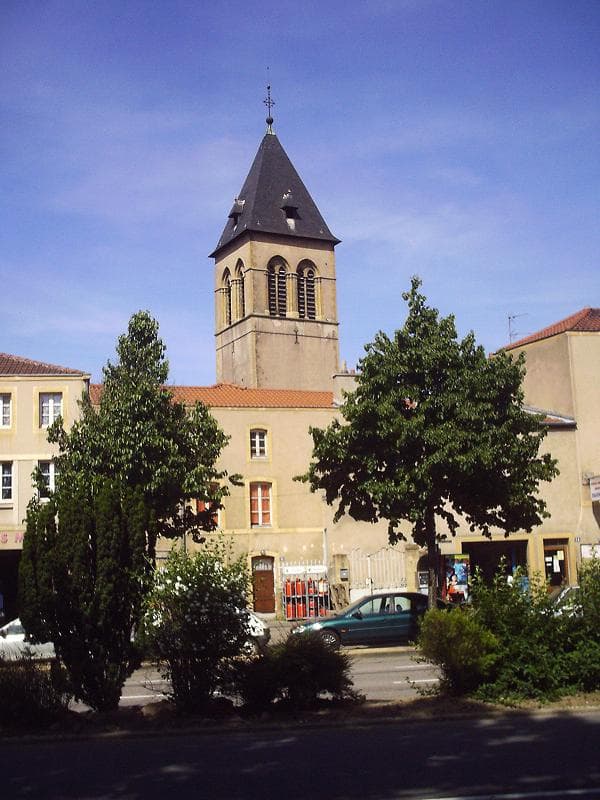
Church of Saint-Maximin
Landmark
A modest 13th-century Gothic church graced with understated yet captivating modern stained-glass windows by Jean Cocteau. Overlooked by visitors fixated on the cathedral, it rewards a brief ten-minute visit with genuine emotion.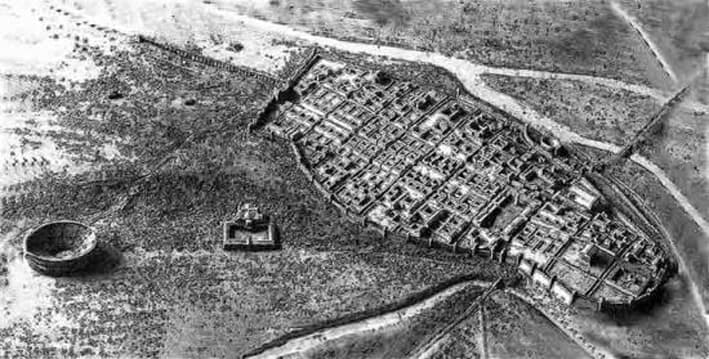 Wikipedia (fr) - CC BY-SA
Roman Amphitheatre of Metz
Landmark
A buried 2nd-century remnant and one of Gaul's largest amphitheatres, originally seating 25,000, with partially visible tiers still discernible in the eponymous neighbourhood. Poorly signposted and rarely crowded. Wikipedia (fr) - CC BY-SA
Church of Saint-Pierre-aux-Nonnains
Landmark
One of France's oldest churches, built on 4th-century Roman foundations. Now converted into a concert hall, it hosts performances within an architectural envelope spanning 1,700 years of history. Wikipedia (fr) - CC BY-SA
Place Saint-Louis
Landmark
Metz's medieval heart, graced with 14th-century Gothic arcades hosting café terraces. As evening falls, the honey-coloured stone glows and the atmosphere effortlessly surpasses comparable squares throughout the region. Wikipedia (fr) - CC BY-SA
Metz Cathedral
Landmark
Known as the 'Lantern of God's Blessing', it boasts the world's largest expanse of stained glass at 6,500 m². The Chagall windows along the north aisle deliver an absolutely stunning visual jolt. Wikipedia (fr) - CC BY-SA
Chapel of the Templars of Metz
Landmark
A small 12th-century octagonal chapel nestled in the courtyard of the Musée de La Cour d'Or, a rare Templar remnant in Lorraine. Often deserted, it offers absolute silence just steps from the town centre's bustle. Wikipedia (fr) - CC BY-SA
Porte des Allemands
Landmark
An imposing 13th-century medieval fortress straddling the Seille, a striking remnant of Metz's ancient ramparts. The view from the adjacent pedestrian bridge is superb, particularly at sunset. Wikipedia (fr) - CC BY-SA
Temple Neuf de Metz
Landmark
Neo-Romanesque Protestant temple built by the Germans between 1901 and 1904, situated on an island in the Moselle. Its silhouette reflects in the river, creating one of Metz's most striking postcards. Wikipedia (fr) - CC BY-SA
Imperial Quarter of Metz
Landmark
A unique Wilhelmine urban ensemble in France, commissioned by Kaiser Wilhelm II after 1871. Walking between the railway station and Place du Général-de-Gaulle reveals grandiose neo-Romanesque and neo-Gothic architecture often overlooked by visitors.Roman Baths of Metz (archaeological site)
Landmark
Remains of magnificent imperial baths from the 2nd century, among the largest in Roman Gaul, visible beneath the Cour d'Or museum. A vertiginous descent into Divodurum Mediomatricorum, ancient Metz.Nature & parks (7)
 Wikipedia (fr) - CC BY-SA
Tanners' Garden
Nature
A pocket botanical garden hidden in the old tanners' quarter, unknown even to locals. Medicinal plants, Lorraine vines, and a secret-garden atmosphere lie metres from the cathedral. Wikipedia (fr) - CC BY-SA
Seille Park
Nature
A substantial 35-hectare landscaped park that opened in 2012 on the site of former industrial wasteland, featuring lakes and flower-dotted meadows. It's the favoured haunt of Metz families seeking a peaceful retreat away from the bustle of the city centre. Wikipedia (fr) - CC BY-SA
Fort de Queuleu
Nature
A 19th-century Séré de Rivières fort converted into a Nazi prison, now a memorial site and nature reserve. The rampart walk offers views of the Moselle and Lorraine hills, charged with historical weight. Wikipedia (fr) - CC BY-SA
Île du Saulcy
Nature
A university island at the heart of the Moselle, ideal for cycling or walking away from traffic. Tree-lined banks offer clear views of the Temple Neuf and the river's channels.Moselle Riverside Cycle Route
Nature
Dedicated cycle path following the Moselle from Metz towards Thionville or Pont-à-Mousson, winding through wetland meadows and wine-growing villages. Locals embrace it at weekends to reach riverside guinguettes.Fort Trail of Metz (Fort Saint-Julien)
Nature
One of the forts forming Metz's fortified ring, easily reached on foot from the centre and surrounded by dry moats and dense vegetation. A paradise for geohistory enthusiasts and photographers alike.Seille Promenade
Nature
A path along the Seille between the Porte des Allemands and the Amphitheatre quarter, still largely undiscovered by tourists. Wild riverbanks, old mills, and vegetation make you forget you're in the city centre.Viewpoints (3)
 Wikipedia (fr) - CC BY-SA
Pont de la Grève and Moselle Riverbanks
Viewpoint
A walkway along the Moselle's channels at the foot of the Esplanade, with views across to the islands and distinctive yellow sandstone facades. The golden light of late afternoon transforms this corner into an Impressionist canvas. Wikipedia (fr) - CC BY-SA
Esplanade of Metz
Viewpoint
A monumental terrace overlooking the Moselle, laid out in the 18th century by Blondel with fountains and formal French gardens. The panorama of the river and church spires offers the finest urban vantage point in the city.Panorama from Colline Sainte-Croix
Viewpoint
A natural vantage point on the left bank of the Moselle offering sweeping views across the cathedral, the Temple Neuf and the river's sinuous meanders. Local Messins come here to picnic on Sundays, well away from the well-trodden tourist trails.Activities (4)
 Wikipedia (en) - CC BY-SA
Opéra-Theatre of Metz Métropole
Activity
France's oldest surviving Italian-style theatre, dating from 1752. The breathtaking red and gold auditorium is a masterpiece, and tickets remain remarkably affordable compared to the major national venues.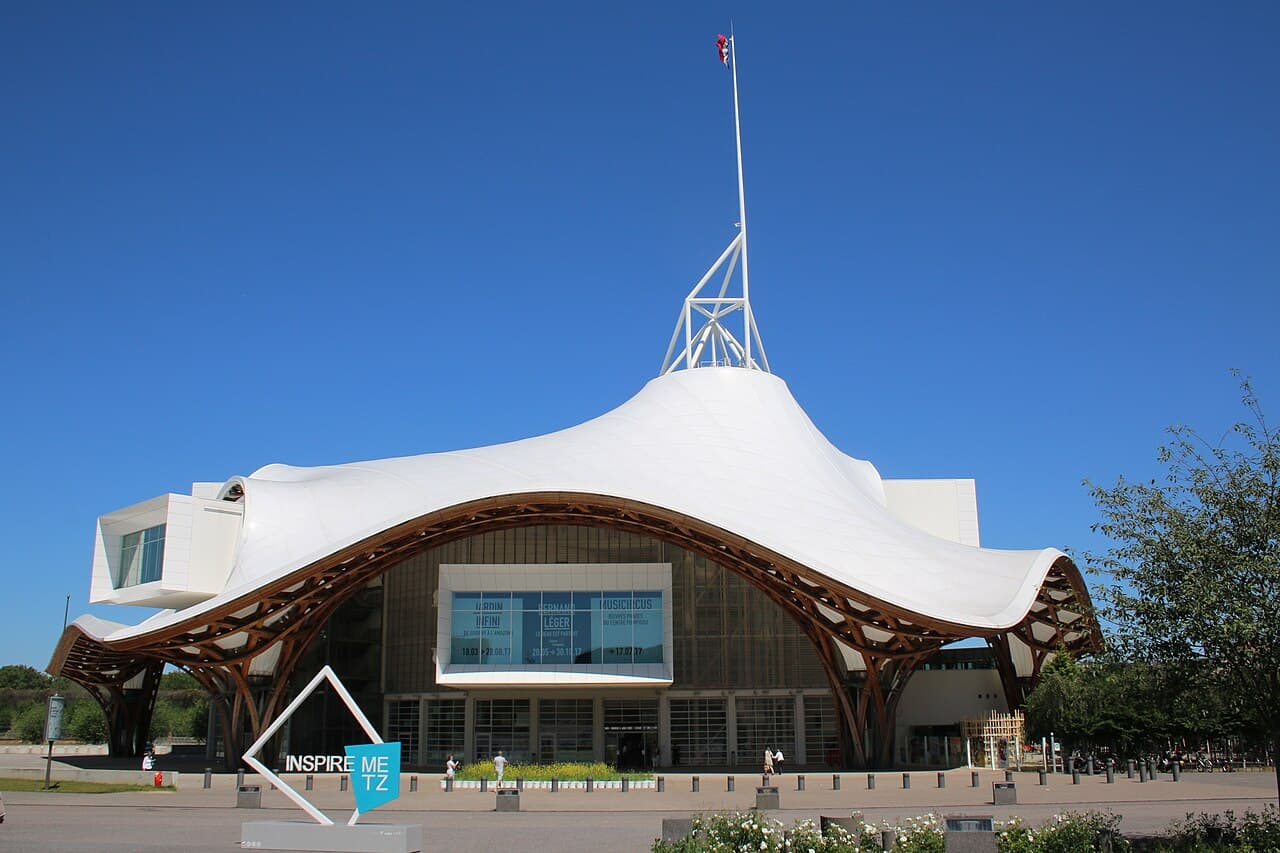 Wikipedia (fr) - CC BY-SA
Centre Pompidou-Metz
Activity
The decentralised outpost of Paris's Pompidou, designed by Shigeru Ban with its distinctive giant straw-hat roof. Temporary exhibitions often outshine the Paris original, and queues are blessedly non-existent. Wikipedia (en) - CC BY-SA
Arsenal de Metz
Activity
A concert hall and contemporary art venue housed in a 19th-century military arsenal, redesigned by Ricardo Bofill. The acoustics rank among France's finest, and the programme ranges from classical music to jazz.Museums of La Cour d'Or
Activity
An archaeological and fine arts museum housed in former Gallo-Roman baths and a medieval granary. The Roman mosaics in situ and Merovingian collections alone make the visit worthwhile.