🇫🇷France · Places to discover
What to see in Paris?
27 places selected by the community - landmarks, nature, hidden restaurants and activities.
Paris functions by arrondissements, each with its own rhythm and residents who don't necessarily cross the Seine. The city carries several centuries of visible urban remaking in its stone, from the medieval Marais to the grand Haussmann boulevards. It's not a city to contemplate from the terraces of grand hotels, but to inhabit for the duration of a stay, métro map in hand.
September and October offer a more reasonable light and footfall than summer. Three to four days suffice for a serious first sweep, a week to begin understanding the neighbourhoods. The métro remains the most efficient way around. Don't concentrate your time around the Eiffel Tower and the Louvre: Père-Lachaise or the Canal Saint-Martin give a far more accurate reading of the real city.
Landmarks & heritage
3 places
 1Wikimedia Commons · CC BY-SA 3.0
Landmark
Panthéon
Neoclassical mausoleum in the Latin Quarter where Voltaire, Rousseau, Marie Curie and Victor Hugo are interred. The Foucault pendulum swinging within since 1851 demonstrates the Earth's rotation – a striking physical demonstration in a monumental setting.
 2Wikimedia Commons · CC BY 3.0
Landmark
Opéra Garnier
A temple of the Second Empire whose baroque interior—grand marble staircase, ceiling painted by Chagall, 8-tonne chandelier—often outshines the performances themselves. Visiting by day without a ticket remains a major architectural experience.
 3Member photo
Landmark
Olympia
Museums
5 places
 4Wikimedia Commons · CC BY-SA 4.0
Museum
Covered Passages of the 2nd Arrondissement – Galerie Vivienne
Network of 19th-century covered passages (Vivienne, Colbert, Véro-Dodat) with mosaic floors, glass roofs and antique shops. The Galerie Vivienne, the most elegant, houses an old bookshop and a tearoom frozen in time.
 5Member photo
Museum
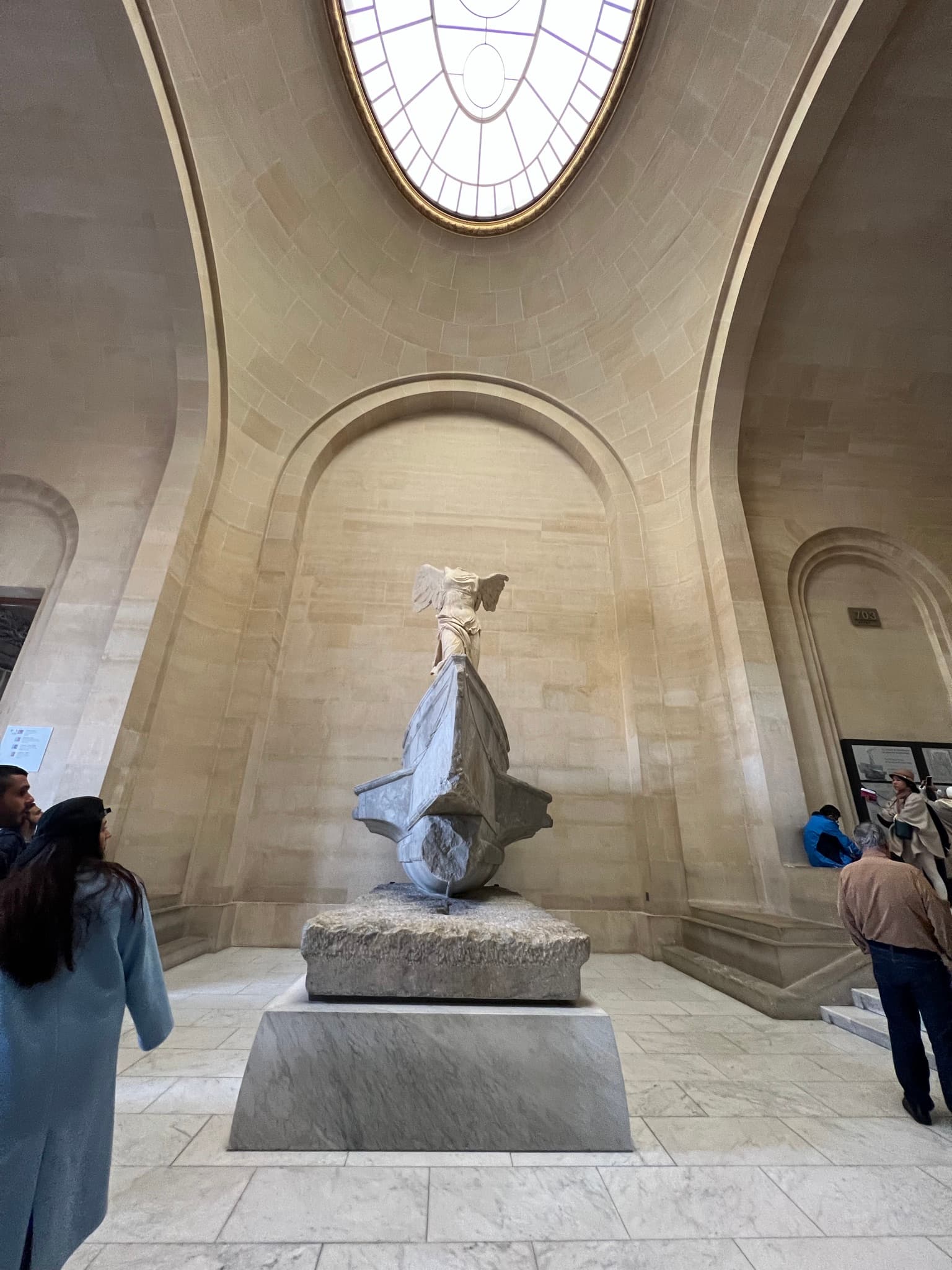
Louvre Museum
- 6
Museum
Museum
Musée Picasso Paris
Hôtel particulier in the Marais housing the world's largest collection of Picasso's works, assembled in part through inheritance tax payments. The 17th-century Hôtel Salé building itself is as impressive as the artworks on display.
- 7
Museum
Museum
Musée d'Orsay
Former railway station converted into a museum housing the world's largest Impressionist collection – Monet, Renoir, Van Gogh, Degas. The grand clock seen from the café on the fifth floor offers a view of Paris that merits a visit in itself.
- 8
Museum
Museum
Musée de Cluny – National Museum of the Middle Ages
Housed in a Gothic townhouse built over 2nd-century Gallo-Roman baths, it contains The Lady and the Unicorn, one of the world's greatest medieval tapestries. An intimate museum, rarely crowded, of unsuspected richness.
Religious sites
2 places
 9Member photo
Religious site
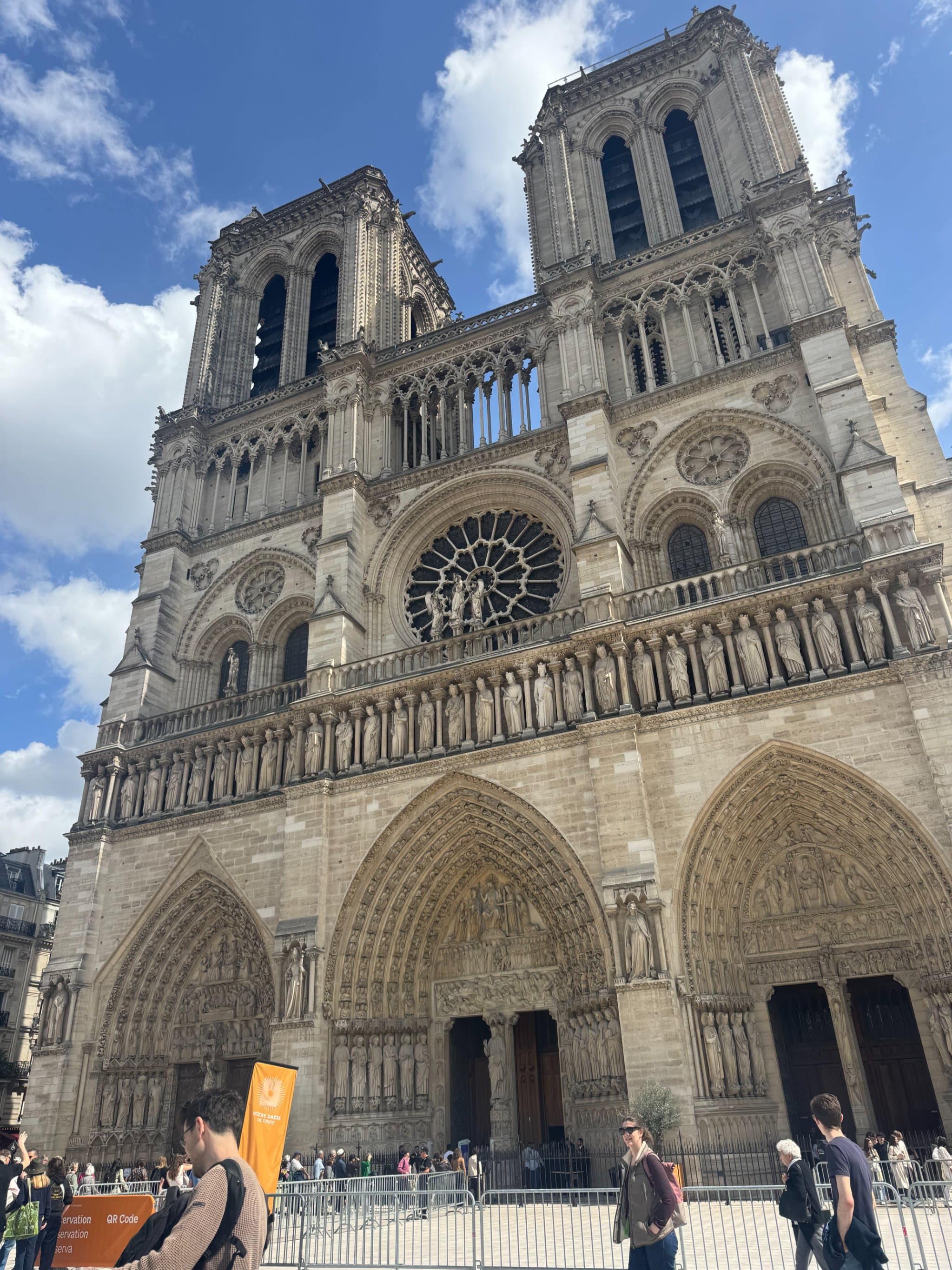
Notre-Dame de Chartres Cathedral
A masterpiece of French Gothic architecture, reopened in December 2024 after five years of restoration following the 2019 fire. The west façade and its gargoyles remain among the finest medieval sculptures in Europe.
- 10
Religious site
Religious site
Sainte-Chapelle
13th-century Gothic jewel often overshadowed by Notre-Dame, its 15 stained-glass windows reaching 15 metres high transform light into a cathedral of colours. Arrive early morning to avoid crowds and see the windows illuminated by the rising sun.
Castles & fortresses
1 place
 11Wikimedia Commons · CC BY-SA 3.0
Castle
Royal Palace and Gardens
Former palace of Cardinal Richelieu now a secret inner garden in the heart of the 1st arrondissement, surrounded by 18th-century shopping galleries. The Buren columns in the courtyard and the timeless atmosphere make it an authentic Parisian refuge.
Nature
1 place
 12Wikimedia Commons · CC BY-SA 3.0
Nature
Promenade Plantée (Coulée Verte René-Dumont)
The world's first urban green corridor (1993), built on a former elevated railway line in the 12th arrondissement – well before New York's High Line. 4.7 km of suspended gardens above the craftspeople's studios along Avenue Daumesnil.
Parks & gardens
3 places
 13Wikimedia Commons · CC BY 2.0
Park
Bois de Vincennes – Paris Floral Park
Green lung of eastern Paris with its 995 hectares, medieval château, lakes and floral park with spectacular seasonal flower exhibitions. Much less crowded than the Bois de Boulogne, it's the playground of families from the 12th arrondissement.
- 14
Park
Park
Jardin des Plantes
Royal botanical garden founded in 1626 with 10,000 plant species, a historic menagerie and the Grande Galerie de l'Évolution. The 18th-century maze at the top of the hill is one of Paris's oldest gardens.
- 15
Park
Park
Buttes-Chaumont Park
A former wasteland and gypsum quarry transformed into a Romantic-style park under Haussmann, featuring cliffs, a lake, the Temple of the Sibyl on a rocky islet, and artificial grottos. The true park of north-east Parisians, away from the usual tourist circuits.
Viewpoints
4 places
 16Wikimedia Commons · CC BY-SA 3.0
Viewpoint
Saint-Jacques Tower
Flamboyant remnant of a 16th-century church destroyed during the Revolution, this isolated tower in the middle of a square offers a unique viewpoint over Paris from its top, accessible in season. Little-known, it captivates through its urban eccentricity.
 17Member photo
Viewpoint
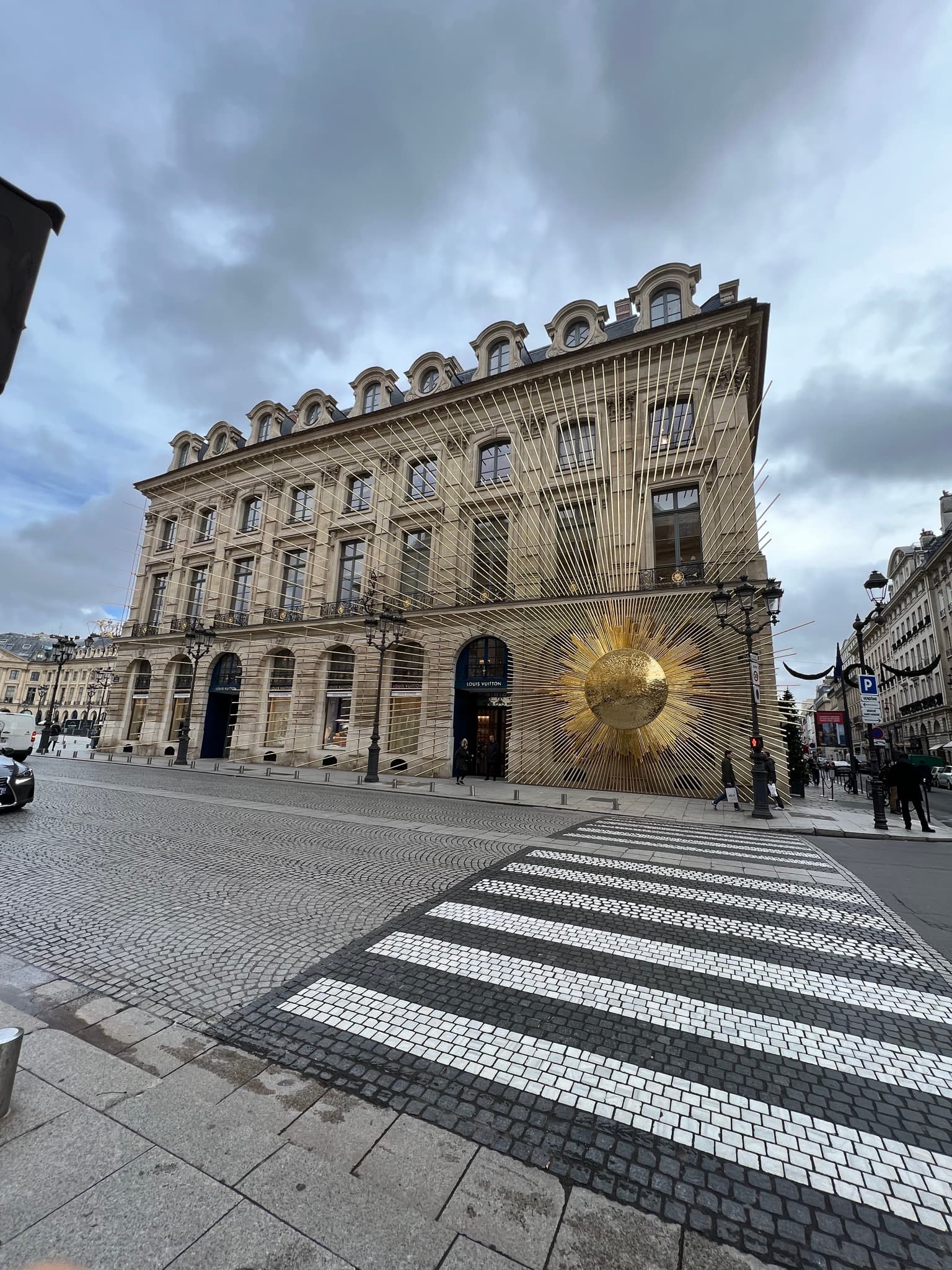
Place Vendôme
- 18
Viewpoint
Viewpoint
BHV Marais Terrace – Rooftop
The rooftop of the BHV department store offers a 360° view over the Marais rooftops, the Hôtel de Ville and Haussmann buildings, with no queues or entrance fee. A drink is all you need to enjoy one of Paris's best free panoramas.
- 19
Viewpoint
Viewpoint
Montmartre Viewpoint – Sacré-Cœur Esplanade
The view from the basilica esplanade encompasses Paris over 30 km on clear days. Avoid the crowded basilica and instead sit on the steps at sunset with Parisians having picnics.
Activities
4 places
 20Wikimedia Commons · CC BY-SA 2.0
Activity
Marché d'Aligre
Paris's most vibrant and cheapest market, combining the covered Beauvau market (cheeses, cured meats, fish) with an outdoor section featuring daily secondhand goods. Frequented by chefs and locals from the 12th arrondissement—Paris's popular spirit still intact.
 21Wikimedia Commons · CC BY 2.0
Activity
Josephine Baker Swimming Pool
Floating pool moored on the Seine at Quai de la Gare, with a retractable roof in summer and views over houseboats. A unique Parisian address for swimming in the Seine without actually being in it – one of the city's most unusual experiences.
- 22
Activity
Activity
Cinémathèque Française
Temple of world cinema housed in a Frank Gehry building in Bercy, featuring retrospectives, permanent exhibitions on cinema history and screenings of rare films in original language. Where Parisian cinephiles gather.
- 23
Activity
Activity
Philharmonie de Paris – Cité de la Musique
Concert hall designed by Jean Nouvel and inaugurated in 2015, featuring some of Europe's finest acoustics and an eclectic programme from classical music to world jazz. The adjacent Musée de la Musique houses instruments belonging to Ingres, Chopin and Stradivarius.
More to discover
4 places
 24Wikimedia Commons · CC BY 3.0
Place
Belleville Village – Rue Denoyez
Street entirely covered in street art in the Belleville neighbourhood, heart of Paris's alternative artistic scene. Independent cafés, artist studios and multicultural grocers make up a popular and creative Paris, far from postcard clichés.
 25Wikimedia Commons · CC BY-SA 3.0
Place
Rue Crémieux
A pedestrian street in the 12th arrondissement with pastel-coloured façades, built in 1865, resembling a quaint English village street or Notting Hill. Highly photogenic, but also a genuine place where residents actually live.
- 26
Place
Place
Arab World Institute – Panoramic Terrace
An architectural masterpiece by Jean Nouvel (1987) featuring a south façade with mechanical moucharabiehs that regulate light like photographic diaphragms. The 9th-floor terrace offers an unobstructed view of Notre-Dame and Île Saint-Louis – free entry.
- 27
Place
Place
Père-Lachaise Cemetery
Paris's largest cemetery and a veritable open-air museum, where Chopin, Proust, Édith Piaf, Jim Morrison and Oscar Wilde are buried. Getting lost in its tree-lined avenues and 19th-century mausoleums is a melancholic and fascinating walk.
Also 🇫🇷 in France