
🇫🇷 France · Places to discover
What to see in Saint-Paul-de-Vence ?
23 places curated by Hozy - landmarks, nature, hidden restaurants and activities.
MAP · OVERVIEW
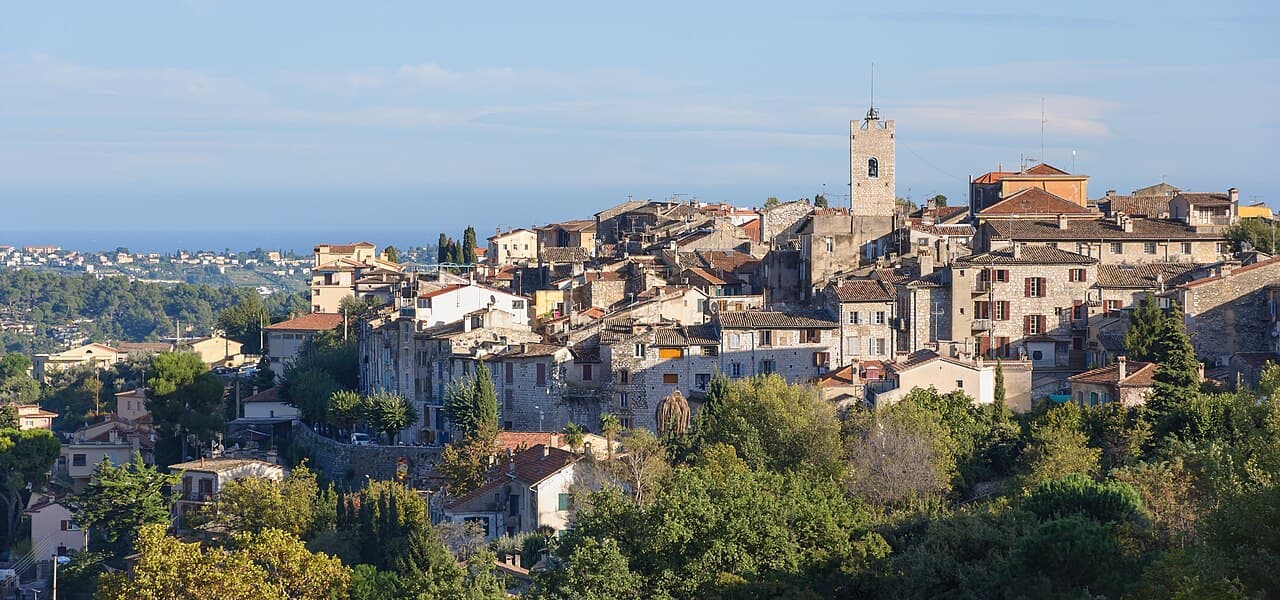
Saint-Paul-de-Vence holds within its medieval alleyways a rare tension: that of a sixteenth-century fortified village that has embraced contemporary art as its second nature. It is no coincidence that the Fondation Maeght established itself here in 1964-the place has attracted painters, sculptors and collectors for decades, many of whom have simply stayed put. The result is a village where galleries sit alongside ramparts without one overshadowing the other.
Spring or September are preferable to avoid the summer crush: in July and August, the alleyways become impassable before 10 a.m. Two days are more than sufficient, including a half-day at the Fondation Maeght. You can drive here from Nice in forty minutes or take a shuttle from Vence. The classic pitfall: confining yourself to the commercial Grand-Rue and missing the calmer, far more revealing northern ramparts.
Landmarks & heritage (9)
 Wikipedia (en) - CC BY-SA
Chapel of the Rosary, Vence (Matisse Chapel)
Landmark
Henri Matisse's absolute masterpiece, completed in 1951 and considered by the artist himself to be his greatest achievement. Yellow, blue and green stained glass flooding the white interior with otherworldly light. Wikipedia (fr) - CC BY-SA
Grand Fountain of Saint-Paul-de-Vence
Landmark
An oval 16th-century wash fountain and lavoir, the village's beating heart where residents still gather. A legendary pétanque spot once frequented by Yves Montand and Picasso. Wikipedia (fr) - CC BY-SA
Medieval Dungeon and Museum of Local History
Landmark
A 13th-century tower now housing a museum tracing Saint-Paul's past from the Wars of Religion through the Belle Époque. Collections of documents, maps and artefacts that illuminate the village's rich heritage.Rue Grande
Landmark
The main thoroughfare of the medieval village, cobbled and lined with art galleries, artist studios and 16th-century dwellings. The very street that drew Matisse, Léger and Picasso in the 1920s.Chapel of the White Penitents
Landmark
Intimate Baroque chapel of the 17th century, decorated by artist Jean-Michel Folon in 2008, with luminous and poetic mosaics and stained glass. A subtle jewel often passed by hurried visitors.Porte de Vence
Landmark
The medieval main gateway to the village, flanked by a watchtower and a bust of Louis XIV. The vaulted passage immediately sets the tone for the fortified settlement.Cemetery of Saint-Paul-de-Vence
Landmark
Modest village cemetery where Marc Chagall has rested since 1985, beneath a simple stone tomb. A quietly moving pilgrimage site that art lovers should not overlook.Collegiate Church of the Conversion of Saint-Paul
Landmark
Romanesque-Gothic church of the 13th century at the heart of the village, housing a remarkable treasury including a Saint Catherine attributed to Tintoret. A living place of worship, serene and wholly authentic.Medieval Ramparts of Saint-Paul-de-Vence
Landmark
Fortified walls dating from the 16th century, built under François Ier and intact along their entire length. The parapet walk affords sweeping views across the hills and out to sea, particularly stunning at sunset.Nature & parks (5)
 Wikipedia (fr) - CC BY-SA
Hill and Olive Groves of Chemin des Gardettes
Nature
An agricultural walking path at the foot of the ramparts, traversing century-old olive groves and vegetable gardens. Authentic Saint-Paul away from the crowds, with views over the perched village.Ancient Olive Trail, Saint-Paul
Nature
A waymarked 5 km loop passing centuries-old olive trees with gnarled trunks dotting the agricultural terraces at the village's foot. Interpretive panels explain Provençal olive cultivation.Lac des Mesclans (Vence Pond)
Nature
Natural water body in the countryside between Saint-Paul and Vence, surrounded by reeds and frequented by herons and ducks. An idyllic 3 km loop around the lake, perfect for families with children.Malvan Valley
Nature
A narrow watercourse north of Saint-Paul, bordered by lush Mediterranean vegetation. A rare pocket of coolness in summer, accessible from the customs path.Saint-Paul State Forest and Malvan Trail
Nature
Network of marked paths through pine forest and garrigue surrounding the village, ideal for a 2 to 3-hour walk. Complete tranquillity, scents of thyme and pine, far from tour coaches.Viewpoints (3)
Saint-Paul Plateau at Sunrise
Viewpoint
The agricultural plateau east of the village, scattered with vines and olive trees, reveals a striking spectacle at dawn when mist cloaks the hills. A moment of grace known only to the early risers.View of the Village from the D2 Road towards Cagnes
Viewpoint
The classic photographic vantage point over Saint-Paul-de-Vence perched on its rocky spur, reached by car along the Cagnes-sur-Mer road. The postcard that locals know but few tourists seek out.Panorama from the Northern Rampart Terrace
Viewpoint
The finest free viewpoint over the Var plain, snow-capped Alps in winter and the Mediterranean shimmering at the horizon. Accessible on foot along the northern ramparts, away from the main tourist streams.Activities (6)
 Wikipedia (fr) - CC BY-SA
Vence Provençal Market
Activity
The neighbouring town of Vence's weekly market (Tuesday and Friday mornings), far more authentic and frequented by local producers than tourist markets. Fruit, vegetables, cheeses and olives from the surrounding hills. Wikipedia (fr) - CC BY-SA
Place De Gaulle Petanque Pitch
Activity
Saint-Paul-de-Vence's legendary boules ground, where Yves Montand, Jacques Prévert and Picasso once competed. Spontaneous games still happen most evenings among locals—you're welcome to join if you ask politely.Galerie Nathalie Obadia - Saint-Paul Space
Activity
A contemporary exhibition space housed in a restored former sheepfold at the village's edge, presenting installations and sculptures in dialogue with the landscape. One of the region's most cutting-edge art addresses.Saint-Paul Ceramics Studio
Activity
A local ceramicist's working studio and shop perpetuating the Provençal faience tradition through contemporary creations. Introductory pottery wheel courses available by appointment.Galerie Catherine Issert
Activity
The region's leading contemporary art gallery, founded in 1977, showcasing major international artists within a luminous off-site space. Demanding programming, free admission.Fondation Maeght
Activity
One of Europe's finest open-air modern art museums, established in 1964 by Aimé and Marguerite Maeght. Josep Lluís Sert's architecture, Miró's labyrinth, Calder's mobiles: a total masterwork.