🇬🇷Greece · Places to discover
What to see in Crète?
19 places selected by the community - landmarks, nature, hidden restaurants and activities.
Crete is not simply another Greek island: it is an entire civilisation unto itself. The palace of Knossos serves as a reminder that the Minoans were building complex cities when Northern Europe still slept beneath forests. Between the Samaria Gorge and the villages of Sfakia, the island retains a rough, proud identity that resists mass tourism without ignoring it altogether.
Spring (April-May) and autumn (September-October) offer the clearest light and most pleasant temperatures for exploring the interior. Allow a minimum of ten days to venture beyond the north coast. A hire car is essential: buses serve the hinterland poorly. Avoid the waterfront tavernas in Heraklion – they live off passing trade, not cooking.
Landmarks & heritage
4 places
 1Wikimedia Commons · CC BY-SA 3.0
Landmark
Aptera Archaeological Site
Ancient city perched above Souda Bay, rarely visited despite its exceptional state of preservation. Features a Roman cistern, Doric temple and views over the Mediterranean's largest natural bay.
 2Wikimedia Commons · CC BY 2.5
Landmark
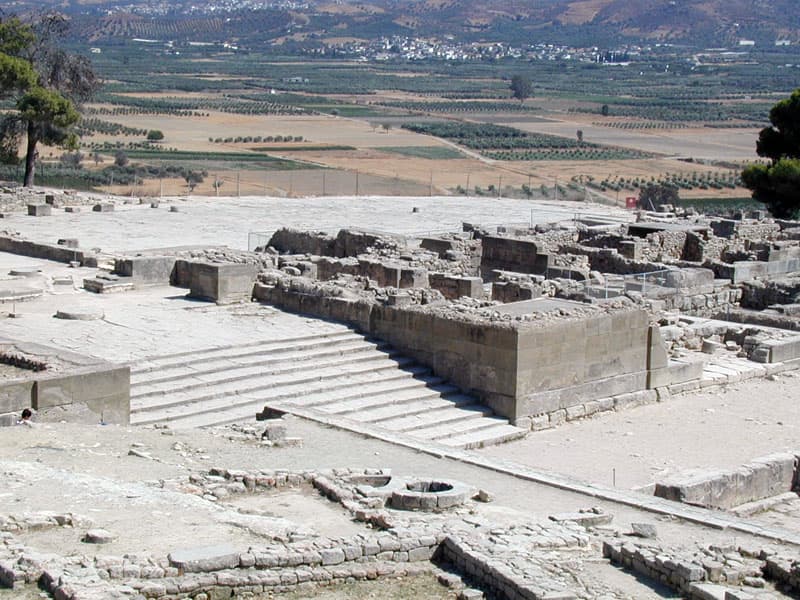
Archaeological Site of Phaistos
Second great Minoan palace in Crete, far less crowded than Knossos yet equally impressive. The view over the Messara plain from the terraces is breathtaking.
 3Wikimedia Commons · CC BY-SA 4.0
Landmark
Kritsa Medieval Village
One of Crete's largest mountain villages, known for traditional embroidery and the Byzantine church of Agios Nikolaos. Less touristy than coastal sites, it preserves authentic Cretan character.
- 4
Landmark
Landmark
Old Town of Chania
One of the Mediterranean's finest Venetian harbours, with Ottoman alleyways, converted mosques and an iconic lighthouse. Explore it early in the morning before the tourist surge to capture its authentic spirit.
Museums
1 place
 5Wikimedia Commons · CC BY-SA 4.0
Museum
Heraklion Archaeological Museum
One of the world's most important museums for Minoan civilisation, housing the Phaistos disc and Knossos frescoes. Essential to visit before the sites to understand what you are looking at.
Religious sites
1 place
 6Wikimedia Commons · CC BY-SA 3.0
Religious site
Arkadi Monastery
Symbol of Cretan resistance against Ottoman occupation, this sixteenth-century monastery is a national memorial site. The Baroque façade is among the island's most elegant.
Castles & fortresses
3 places
 7Wikimedia Commons · CC BY-SA 3.0
Castle
Spinalonga Fortress
Former Venetian island fortress that became a leper colony until 1957, made famous by Victoria Hislop's novel. Accessible by boat from Elounda, it exudes a unique and melancholic atmosphere.
 8Wikimedia Commons · CC BY-SA 3.0
Castle
Knossos Palace
Major archaeological site of Minoan civilisation, over 3,500 years old. Despite its popularity, Sir Arthur Evans's reconstructions allow you to visualise palatial architecture as nowhere else in the Mediterranean.
- 9
Castle
Castle
Koules Fortress (Heraklion)
Sixteenth-century Venetian fortress guarding the entrance to Heraklion's old harbour. Recently restored, it offers panoramic views over the sea and the city's fortifications.
Nature
5 places
 10Wikimedia Commons · CC BY-SA 4.0
Nature
Kournas Lake
Crete's only natural freshwater lake, nestled in a cirque of verdant hills just kilometres from the sea. The waters shift in colour according to the light, from turquoise to emerald green.
 11Wikimedia Commons · CC BY 3.0
Nature
Imbros Gorge
A lesser-known alternative to Samaria Gorge, passable even in summer and without reservation. An 8-kilometre walk between spectacular limestone walls, accessible to all levels.
 12Wikimedia Commons
Nature
Lasithi Plateau
Vast agricultural plateau at 840 metres altitude, ringed by mountains and once dotted with hundreds of white windmills. A timeless atmosphere, authentic villages and cultivation of potatoes and saffron.
 13Wikimedia Commons
Nature
Psiloritis Mountain (Ida)
Crete's highest peak at 2,456 metres, Mount Ida is home to the Idaean Cave (Andron), the mythological birthplace of Zeus. The hike to the summit is rewarded with views across the entire island on clear days.
 14Wikimedia Commons · CC BY-SA 4.0
Nature
Samaria Gorge
Europe's longest gorge (18 km), designated a national park, offering an unforgettable trek between 600 m cliffs. Open April to October, it ends at the wild beach of Agia Roumeli, accessible only on foot or by boat.
Activities
1 place
- 15
Activity
Activity
Diving at Agios Nikolaos
The waters of Mirabello Gulf offer some of the best visibility in the Eastern Mediterranean, with wrecks, underwater caves and rich seabeds. Several reputable diving centres operate from the town.
Beaches
2 places
 16Wikimedia Commons · CC BY-SA 4.0
Beach
Preveli Beach
A unique beach where a palm-lined river meets the sea, creating a subtropical delta. Accessible on foot from Preveli Monastery or by boat from Plakias.
- 17
Beach
Beach
Seitan Limania Beach
Secret cove with intensely electric blue waters, accessible via a steep path from the Akrotiri peninsula. Little known to passing tourists, it's where local Cretans go.
More to discover
2 places
 18Wikimedia Commons
Place
Loutro Village
Tiny white and blue village accessible only on foot or by boat, with no roads or cars. A few tavernas, fishermen's houses and azure waters—the most peaceful spot on the south coast.
 19Wikimedia Commons · CC BY-SA 4.0
Place
Rethymno Old Town
The best-preserved Ottoman and Venetian old town in Crete, dominated by the Fortezza fortress overlooking the sea. Minarets, Venetian fountains and flower-lined alleyways coexist in rare architectural harmony.
Also 🇬🇷 in Greece