🇭🇺Hungary · Places to discover
What to see in Budapest?
24 places selected by the community - landmarks, nature, hidden restaurants and activities.
Budapest is two cities in one, separated by the Danube: Buda, hilly and residential, and Pest, flat and teeming. This duality reads in the architecture, a mix of baroque, Art Nouveau and Soviet brutalism, which gives Hungary's capital a strange and compelling coherence. The Parliament on the river's edge and the Central Market Hall (Vásárcsarnok) embody this tension between official grandeur and dense daily life.
The best period falls between April and June, before heat and tour groups saturate the streets. Three to four days suffice to grasp the essentials without scattering yourself. The metro network, one of Europe's oldest, remains the most efficient way to move about. Avoid the thermal baths on weekend evenings-Széchenyi transforms then into an amusement park, far from the restorative atmosphere you come for.
Landmarks & heritage
4 places
 1Member photo
Landmark
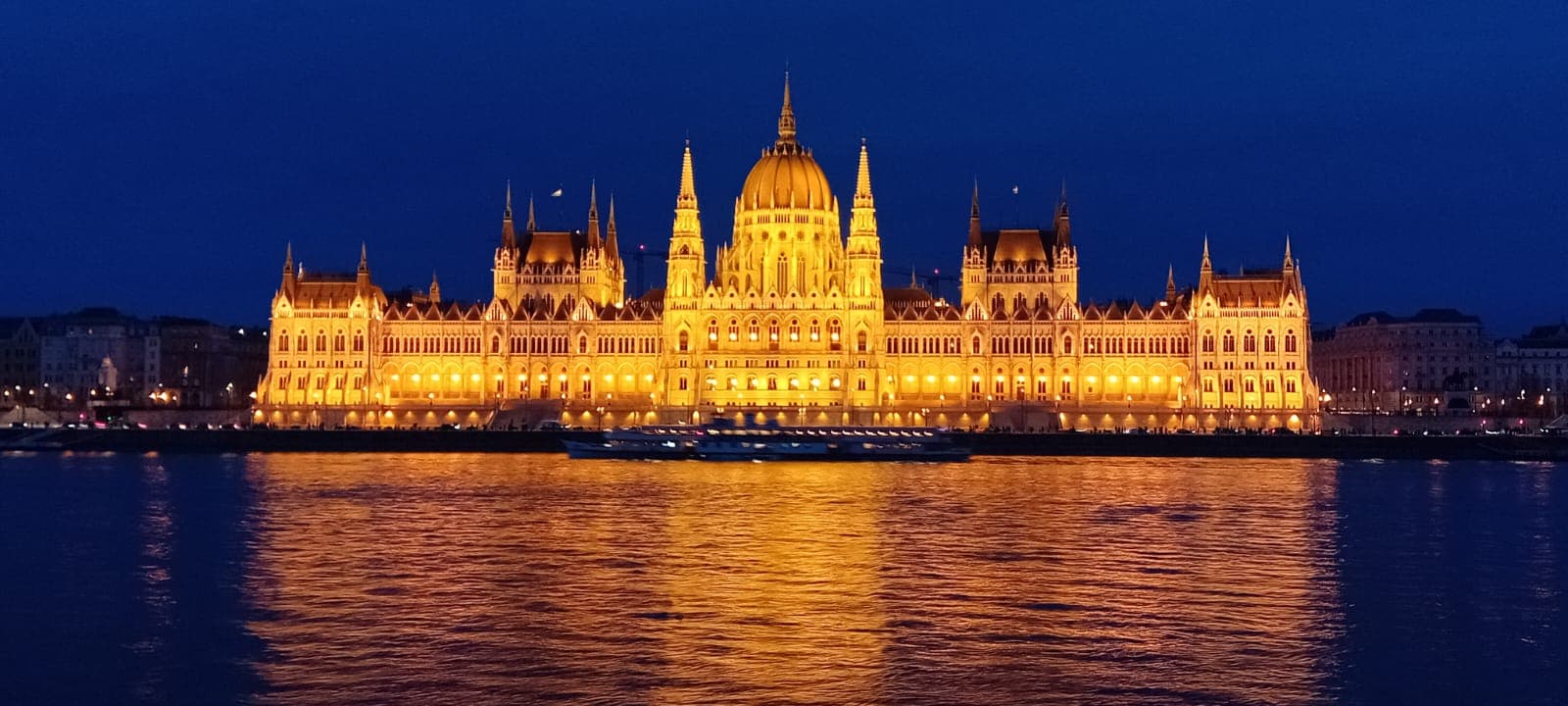
Parliament of Budapest
A Neo-Gothic masterpiece on the Danube's bank and one of the world's largest parliamentary buildings. The gilded interior and the Crown of Saint Stephen alone warrant a guided tour.
 2Wikimedia Commons · CC BY-SA 4.0
Landmark
Central Market Hall (Nagycsarnok)
Covered hall from 1896 with colourful iron framework, a true temple of local gastronomy. Ground floor features cured meats, paprika and cheeses; upstairs, lángos and embroidery.
 3Wikimedia Commons · CC BY 3.0
Landmark
Roman Ruins of Aquincum
Remains of the capital of the Roman province of Lower Pannonia, featuring an amphitheatre, thermal baths and an archaeological museum. A little-visited site despite its exceptional historical importance, in the far north of Budapest.
 4Wikimedia Commons
Landmark
Chain Bridge (Széchenyi Lánchíd)
First permanent bridge over the Danube, symbol of Budapest since 1849. The walk at sunset, with a view of illuminated Buda and Pest, is unforgettable.
Museums
1 place
 5Wikimedia Commons · CC BY-SA 3.0
Museum
Museum of Fine Arts, Budapest
One of Central Europe's richest collections of Old Masters: El Greco, Raphael, Rembrandt, Goya. The Egyptian and Greco-Roman antiquities department is often overlooked but exceptional.
Religious sites
3 places
 6Wikimedia Commons · CC BY-SA 4.0
Religious site
St Stephen's Basilica, Budapest
Neoclassical cathedral dominating Pest, with a dome offering a 360° panorama of the city. The mummified right hand of St Stephen, a national relic, is displayed inside.
 7Wikimedia Commons · CC BY-SA 3.0
Religious site
Dohány Street Synagogue
Europe's largest synagogue, a Moorish-Byzantine masterpiece from 1859. The Weeping Garden with its tombs and the Hungarian Holocaust Memorial Museum are profoundly moving.
 8Wikimedia Commons · CC BY-SA 4.0
Religious site
Matthias Church (Mátyás-templom)
14th-century Gothic church with multicoloured ceramic tiles, site of Hungarian royal coronations. The interior with neo-Romanesque frescoes restored by Schulek is stunning.
Castles & fortresses
2 places
 9Wikimedia Commons · CC BY-SA 3.0
Castle
Buda Castle (Budavári Palota)
Palatial complex overlooking the western Danube bank, housing the Hungarian National Gallery and Budapest History Museum. The ascent by funicular is worth it for the view.
- 10
Castle
Castle
Buda Castle District – Úri Street
Medieval paved street in the castle district, lined with preserved Gothic and Baroque houses. Less frequented than the main street, it reveals the civil architecture of the Hungarian Middle Ages.
Nature
2 places
 11Wikimedia Commons · CC BY-SA 3.0
Nature
Buda Forest – János Hill Trail
Wooded hill west of Buda peaking at 527 metres, accessible by chairlift from Zugliget. The lookout tower at the summit offers views over wooded hills, far from urban bustle.
- 12
Nature
Nature
Marguerite Island (Margitsziget)
A 2.5km island-park in the middle of the Danube and the green lung of Budapest's residents. A musical fountain, medieval ruins, thermal pools and cycling paths make it the favourite relaxation spot for locals.
Parks & gardens
1 place
 13Wikimedia Commons · CC BY 3.0
Park
City Park (Városliget)
Large public park of 100 hectares housing Vajdahunyad Castle, the zoo and Széchenyi Thermal Baths. In winter, the ice rink on the lake is Europe's largest outdoor rink.
Viewpoints
4 places
 14Wikimedia Commons · CC BY-SA 4.0
Viewpoint
Fishermen's Bastion (Halászbástya)
Neo-Romanesque white stone terrace offering the finest views over Parliament and the Danube. Built between 1895 and 1902, its seven towers symbolise the seven founding Magyar tribes.
 15Wikimedia Commons · CC BY-SA 2.5
Viewpoint
Gellért Hill and Citadel
Rocky promontory 235 metres above the Danube, crowned by the Austrian Citadel from 1851 and the Liberty Statue. Hiking trails offer successive viewpoints across the entire city.
- 16
Viewpoint
Viewpoint
Danube Embankment, Pest Side – Vigadó Promenade
Riverside promenade between Chain Bridge and Elisabeth Bridge, lively with locals in the evening. The nocturnal view of illuminated Buda from this bank is one of the city's finest.
- 17
Viewpoint
Viewpoint
Corvinus Rooftop Bar Terrace (Corvin Tető)
Secret rooftop bar above a shopping centre, frequented by locals for aperitifs with views over Pest's rooftops. Relaxed atmosphere, far from the tourist terraces of the city centre.
Activities
4 places
 18Wikimedia Commons · CC BY 3.0
Activity
Széchenyi Thermal Bath
Europe's largest open-air thermal complex, housed in a yellow neo-Baroque palace in City Park. The outdoor pools heated to 38°C, even in winter under snow, offer a unique experience.
 19Wikimedia Commons
Activity
Rudas Baths (Rudas Gyógyfürdő)
A 16th-century Ottoman hammam with its starred oculus dome, one of Budapest's most authentic. On Friday evenings, the rooftop with panoramic jacuzzi becomes a trendy bar-pool.
- 20
Activity
Activity
Rack Railway and Children's Train (Gyermekvasút)
Historic rack railway line in Buda's hills, operated by children in uniform under adult supervision. A unique socialist curiosity for traversing Buda forest by vintage train.
- 21
Activity
Activity
Buda Caves – Buda Labyrinth
Network of natural caves and galleries beneath the castle hill, carved out by thermal springs. Used as a medieval refuge and military bunker, they offer a fascinating underground visit.
More to discover
3 places
 22Wikimedia Commons · CC BY-SA 4.0
Place
Óbuda District – Fő Square
Heart of ancient Roman Buda, with 18th-century Baroque houses preserved around a cobbled square. Village atmosphere within the city, with art galleries and restaurants away from the usual tourist circuits.
 23Wikimedia Commons · CC BY-SA 4.0
Place
Hunyadi tér Market
Covered neighbourhood market in the 6th district, frequented exclusively by local residents. Seasonal vegetables, farmhouse cheeses and local charcuterie at prices without tourist markup.
- 24
Place
Place
Ruin Bar Quarter – Kazinczy Street
Epicentre street of Budapest's ruin bars, with Szimpla Kert leading the way. These bars installed in rehabilitated derelict buildings are a unique Budapest invention, vibrant even on Sunday morning (organic market).
Also 🇭🇺 in Hungary