
🇮🇹 Italy · Places to discover
What to see in Noto ?
18 places curated by Hozy - landmarks, nature, hidden restaurants and activities.
MAP · OVERVIEW
Noto is not simply a baroque town: it is a deliberate urban project, rebuilt from scratch after the 1693 earthquake according to a grid plan and a palette of golden limestone that turns orange at sunset. The Cattedrale di San Nicolò and the Palazzo Ducezio set the tone for a city that chose architectural coherence as its identity-a rarity in Sicily.
Spring (April-May) remains the best window, before the heat and coach parties that saturate Corso Vittorio Emanuele from July onwards. Two days amply suffice to cover the ground on foot-the only way to move through the historic centre. Avoid limiting yourself to the main street: a parallel street is enough to rediscover an almost empty town that feels far more authentic.
Landmarks & heritage (10)
 Wikipedia (it) - CC BY-SA
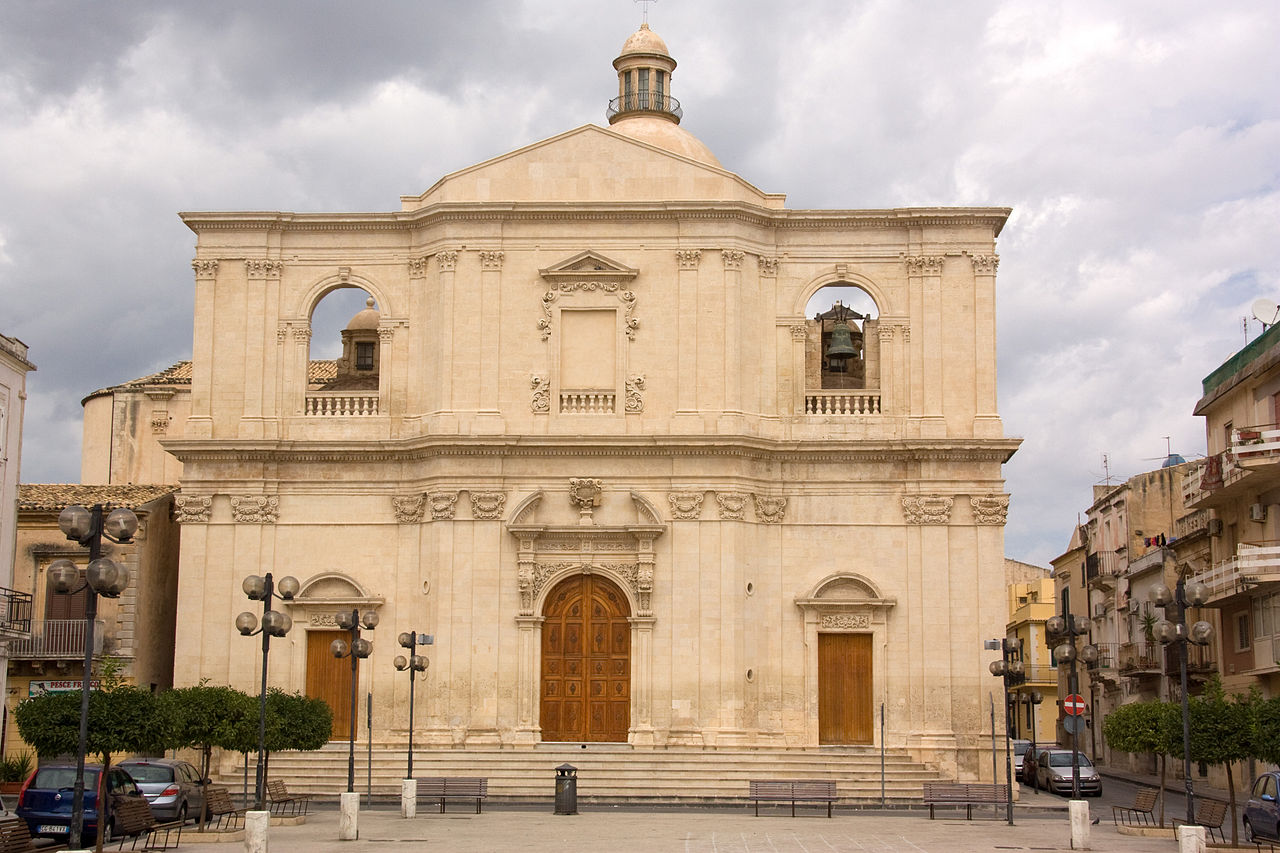
Church of the Santissimo Crocifisso
Landmark
Unfinished 18th-century church whose austere façade contrasts with sumptuous interiors. It houses the Madonna of the Snows, an 11th-century Norman sculpture rescued from the rubble of the old town. Wikipedia (it) - CC BY-SA
Palazzo Villadorata (Nicolaci)
Landmark
The most extravagant baroque palace in Noto, featuring six balconies supported by sculpted chimeras, sirens and winged horses. Each May, its façade is draped with flower carpets for the Infiorata festival. Wikipedia (it) - CC BY-SA
Cathedral of San Nicolò
Landmark
Masterpiece of Sicilian Baroque and UNESCO World Heritage site, rebuilt following the 1693 earthquake. Its monumental staircase and tripartite façade dominate Corso Vittorio Emanuele with incomparable grandeur. Wikipedia (it) - CC BY-SA
Palazzo Ducezio
Landmark
Neoclassical town hall of elegant proportions, built in the 18th century facing the cathedral. Its interior houses the Hall of Mirrors, a state reception room rarely glimpsed by hurried visitors. Wikipedia (it) - CC BY-SA
Porta Reale
Landmark
Neoclassical triumphal arch erected in 1838 to welcome Ferdinand II of Bourbon, marking the solemn entrance to Corso Vittorio Emanuele. The ideal starting point for ascending the town's baroque spine. Wikipedia (it) - CC BY-SA
Church of Santa Chiara
Landmark
Oval church designed by Gagliardi, with an unusually rare interior plan in Sicily. The attached monastery still houses cloistered nuns and produces convent pastries sold through the grille. Wikipedia (it) - CC BY-SA
Church of San Domenico
Landmark
Spectacular convex façade by Rosario Gagliardi, reckoned amongst Sicily's finest Baroque designs. The interior retains stuccowork and frescoes of stunning richness. Wikipedia (fr) - CC BY-SA
Noto Antica
Landmark
Ruins of the ancient Arab-Norman town abandoned after the 1693 earthquake, perched on Monte Alveria. A phantom settlement overgrown with vegetation, strikingly melancholic and nearly deserted.Fontana di Ercole
Landmark
18th-century baroque fountain adorned with Hercules vanquishing the Nemean Lion, tucked into a quiet square off the Corso. A traditional gathering spot for residents of the Landolina quarter.Palazzo Trigona di Cannicarao
Landmark
Baroque palace with the ornate balconies characteristic of Via Nicolaci, now converted into a boutique residence. Its façade remains one of the most photographed in the lower town.Nature & parks (1)
Viewpoints (2)
 Wikipedia (it) - CC BY-SA
Monastero del Santissimo Salvatore – Bell Tower
Viewpoint
The octagonal bell tower of this Benedictine monastery offers the highest vantage point over Noto's rooftops. Few visitors climb all the way up, making it one of the town's most exclusive views.Belvedere of Noto – Panorama from the Convent of the Santissimo Salvatore
Viewpoint
The finest viewpoint over Noto's ochre rooftops and the valley below, from the convent terrace. Particularly stunning in late afternoon when golden light sets the baroque façades ablaze.Activities (4)
 Wikipedia (it) - CC BY-SA
Teatro Comunale Vittorio Emanuele III
Activity
Intimate 19th-century Italian theatre, recently restored, programming baroque music and Sicilian puppet theatre (Opera dei Pupi). Check local listings; tickets are inexpensive.Masseria Renna – Olive Oil and Wine Tasting
Activity
Agricultural estate in the hills north of Noto producing award-winning olive oil and small-batch Nero d'Avola. Visits by reservation include tastings in 18th-century vaulted cellars.Laboratorio di Ceramica Artistica – Bottega Falanga
Activity
A traditional ceramics workshop where the artisan still works at a foot-operated wheel using Arab-Norman techniques. Watch the craftsman at work and commission unique pieces featuring Noto Baroque motifs.Infiorata di Noto
Activity
On the third Sunday of May, Via Nicolaci becomes covered with a 100-metre floral carpet depicting Baroque patterns, created by local residents. An authentic community event prepared over weeks by neighbourhood groups.