
🇮🇹 Italy · Places to discover
What to see in Pienza ?
21 places curated by Hozy - landmarks, nature, hidden restaurants and activities.
MAP · OVERVIEW
Pienza is a pocket-sized town built to order in the 15th century by Pope Pius II, who wanted to transform his home village into an ideal Renaissance city. The result fits into a few streets: a cathedral, a palace, a central square-the Piazza Pio II-and an architectural coherence rare for the period. What strikes you here isn't so much an accumulation of monuments as the clarity of an urban vision still intact.
Two hours are enough to walk through Pienza, but an overnight stay lets you see it without the coach parties that arrive mid-morning from Siena or Florence. Come in spring or autumn to enjoy the Val d'Orcia hills without summer heat. Hire a car: public transport makes the region nearly unreachable. Avoid pecorino shops on the Via dell'Amore frontage, often overpriced-the cheese stalls at Saturday market are far more honest.
Landmarks & heritage (10)
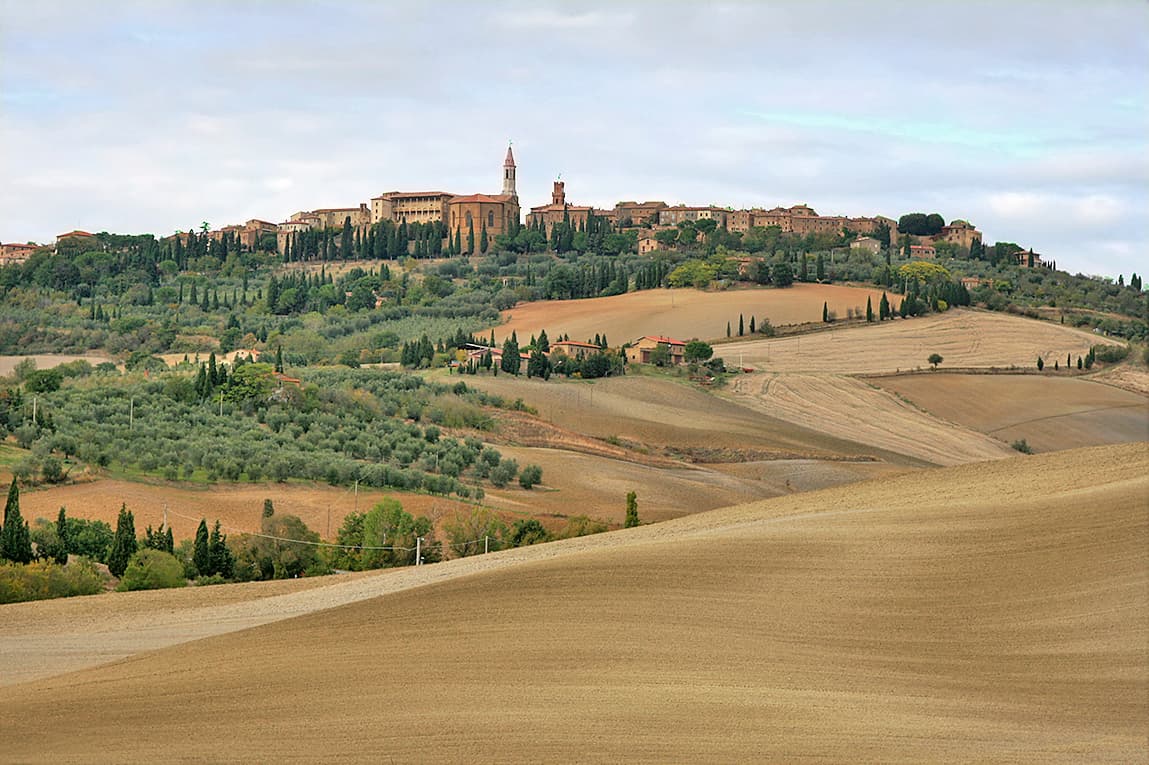 Wikipedia (fr) - CC BY-SA
Piazza Pio II
Landmark
A Renaissance square designed as a unified whole, UNESCO-listed and regarded as one of Europe's first examples of planned urbanism. The harmony between the palace, cathedral and communal palazzo is striking. Wikipedia (it) - CC BY-SA
Palazzo Piccolomini
Landmark
A papal residence designed by Bernardo Rossellino in 1462, considered the first Renaissance palace in central Italy. The suspended garden offers a breathtaking view across Val d'Orcia. Wikipedia (it) - CC BY-SA
Church of San Francesco di Pienza
Landmark
A 14th-century Gothic church predating Pius II's refoundation of the city, with partially preserved medieval frescoes. It offers a contemplative atmosphere well away from the tourist crowds. Wikipedia (fr) - CC BY-SA
Pieve di Corsignano
Landmark
An 11th-century Romanesque church where Enea Silvio Piccolomini, the future Pius II, was baptised, set 500 metres below Pienza. Its sculpted façade is of exceptional quality, set in a wholly isolated rural setting. Wikipedia (fr) - CC BY-SA
Fontana delle Monache – Convent Quarter
Landmark
A small Renaissance fountain in the former convent quarter, north-east of the town. A genuine hub of local life, far removed from tourist crowds, with the authentic atmosphere of a Tuscan village. Wikipedia (it) - CC BY-SA
Palazzo Comunale di Pienza
Landmark
A modest 15th-century civic palace with an open arcade loggia overlooking Piazza Pio II. Climbing to the belfry rewards you with a sweeping 360° view across Pienza's rooftops and the surrounding countryside. Wikipedia (it) - CC BY-SA
Museo Diocesano di Pienza
Landmark
A small museum housed in the Palazzo Borgia adjacent to the cathedral, showcasing sacred artworks by Sano di Pietro and an exceptionally rare collection of medieval liturgical textiles.Medieval Wells of Pienza
Landmark
Two medieval travertine wells hidden in the alleyways behind the cathedral, remnants of the former Corsignano settlement before Renaissance redevelopment. An architectural detail often overlooked by visitors.Porta al Ciglio
Landmark
An ancient medieval gateway on the city's northern side, far quieter than the central precinct. It opens onto a rampart walk offering sweeping views down across the vines and rolling hills of the Orcia valley.Cathedral of Santa Maria Assunta
Landmark
A Renaissance masterpiece commissioned by Pius II, featuring a unique travertine façade unmatched in Tuscany. The interior houses five exceptional Flemish altarpieces presented by the Pope himself.Nature & parks (4)
Via delle Mura Orientali – Eastern Rampart Walk
Nature
A path running along Pienza's eastern ramparts, lined with olive trees and cypresses, offering views across the Orcia hills. This 15-minute walk sits pleasantly beyond the main tourist routes and is beloved by locals.Hanging Garden of Palazzo Piccolomini
Nature
A suspended garden behind the papal palace, laid out in three geometric terraces with clipped boxwood. The view across the Val d'Orcia from this Renaissance garden ranks among Tuscany's finest vistas.Val d'Orcia Nature Reserve – Tufo Trail
Nature
A walking path winding through the clay-tufa badlands (biancane) encircling Pienza—a uniquely lunar landscape found nowhere else in Tuscany. Less than two hours on foot for a complete escape from the ordinary.Strada Statale 146 – Cypress Trees of San Quirico
Nature
The stretch of road between Pienza and San Quirico d'Orcia ranks among Tuscany's most emblematic landscapes, with rows of cypress crowning the ridgelines. Walk or cycle it at sunrise for the finest experience.Viewpoints (3)
Monte Amiata – View from the Southern Ramparts
Viewpoint
The southern stretch of Pienza's rampart walk offers a direct view of the extinct Monte Amiata volcano and the Orcia hills. A peaceful spot overlooked by visitors in a hurry.Podere Belvedere – Crete Senesi Panorama
Viewpoint
An agricultural track north of Pienza skirting isolated farmsteads and opening onto the Crete Senesi, those gently undulating clay hills characteristic of the Siennese landscape. Best visited at dawn or dusk.Belvedere di Pienza – Via dell'Amore
Viewpoint
The city's most photographed viewpoint, at the far end of Via dell'Amore, commanding a spectacular panorama across the Val d'Orcia, Monte Amiata and the iconic cypress groves of Tuscany.Activities (4)
Pienza Friday Market
Activity
A small weekly Friday morning market where local producers sell cheese, vegetables, honey and cured meats. It's the perfect opportunity to buy pecorino directly from the shepherd who made it.Atelier Ceramiche Mato – Artisan Pottery
Activity
Small Tuscan ceramics studio run by a local craftsman in the lanes behind the cathedral. Unique pieces inspired by Renaissance motifs; you can watch the potter at work.Corso il Rossellino – Pecorino Shops
Activity
Pienza's main street is lined with artisan cheese vendors selling local pecorino in all its forms. Always ask for a taste before buying: the differences in ageing are remarkable.Podere Il Casale – Agriturismo and Cheese Shop
Activity
Organic farm 3km from Pienza producing the celebrated pecorino di Pienza, aged with ash, walnut leaves or wine. Cheese-making visits available by reservation; direct sales on site.