🇮🇹Italy · Places to discover
What to see in Spoleto?
22 places selected by the community - landmarks, nature, hidden restaurants and activities.
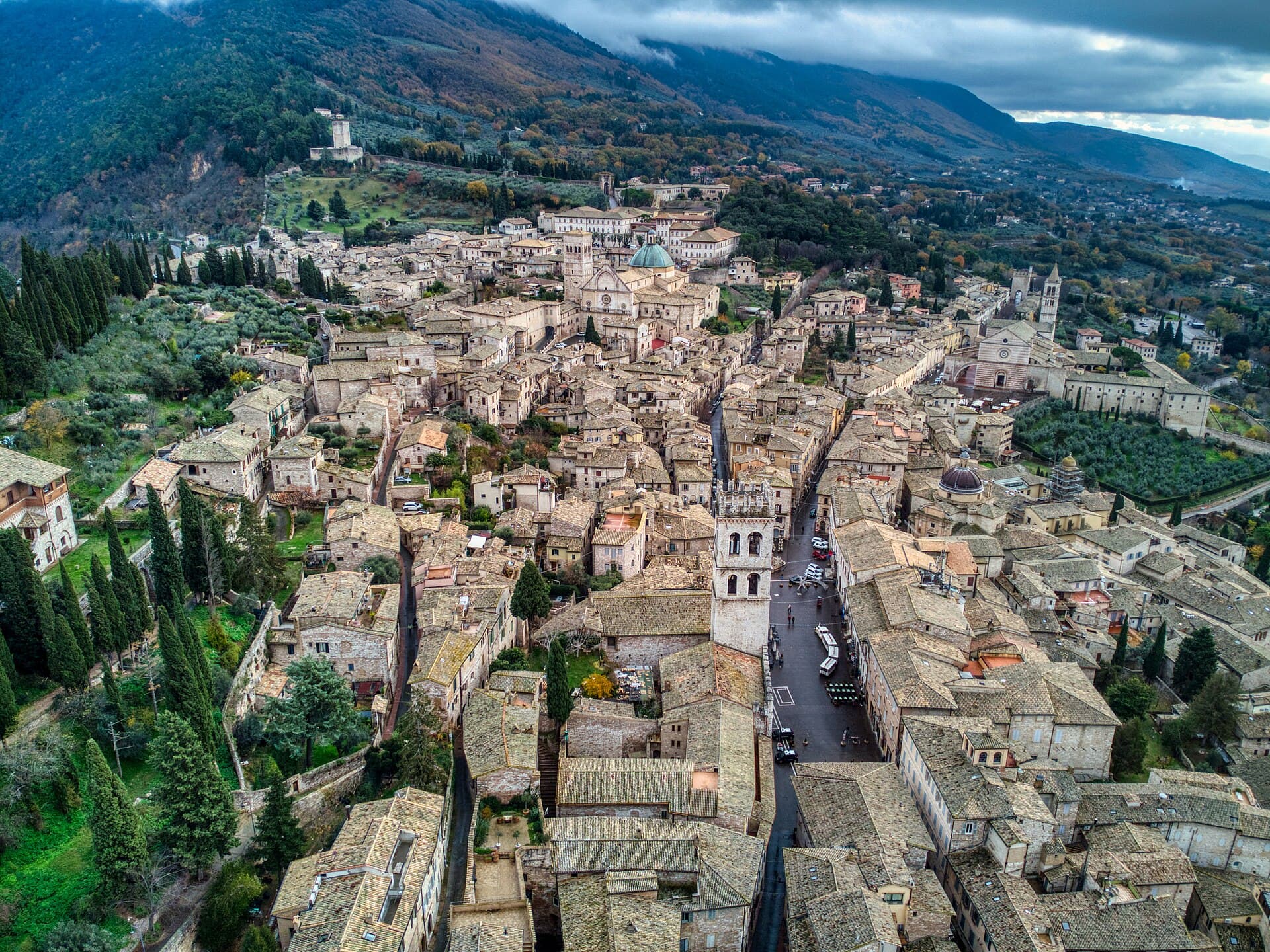
Spoleto has stood since Roman times, and it shows. This Umbrian town cascades down a hillside above the Spoleto valley with rare coherence: the Ponte delle Torri, a 230-metre medieval aqueduct suspended in thin air, sums up everything the town has to say. Outside the Festival dei Due Mondi season, Spoleto returns to its rhythm as a lived-in town, which makes it far easier to read.
Spring and autumn are the right seasons; summer brings festival tourism that chokes accommodation in July. Two days suffice to explore the old town on foot-the only sensible way here, as cars are pointless and car parks distant. Skip restaurants around Piazza del Duomo, which live solely off passing trade-drop down a lane or two for honest prices.
Landmarks & heritage
6 places
 1Wikimedia Commons · CC BY 3.0
Landmark
Roman Theatre of Spoleto
First-century BC Roman theatre still in use for open-air performances. The adjacent archaeological museum holds a fine collection of sculptures and inscriptions.
 2Wikimedia Commons · CC BY-SA 4.0
Landmark
Arch of Drusus and Germanicus
First-century AD Roman triumphal arch embedded in the urban fabric, visible from Piazza del Mercato. A discreet yet striking vestige of ancient Spoletium.
 3Wikimedia Commons · CC BY 3.0
Landmark
Tempietto sul Clitunno
A stunningly elegant Early Christian temple from the 5th–7th century, inscribed on the UNESCO World Heritage list. Often mistaken for a Roman temple, it conceals some of central Italy's oldest frescoes.
- 4
Landmark
Landmark
Polygonal Walls of Spoleto
Cyclopean fortifications dating from the 4th–3rd century BC, visible at several points around the lower town. These colossal stone blocks, laid without mortar, bear witness to the power of ancient Spoletium.
- 5
Landmark
Landmark
Piazza del Mercato
Former Roman forum square, animated by daily markets and bar terraces. This is where authentic Spoleto's heartbeat throbs, far from the tourist hustle.
- 6
Landmark
Landmark
Bridge of Towers
A fourteenth-century medieval aqueduct stretching 230 metres long and 80 metres high, connecting the city to Monteluco hill. The vertiginous views over the Tessino gorge and shadowed forests below are breathtaking.
Museums
1 place
- 7
Museum
Museum
Museo Nazionale del Ducato di Spoleto
Museum housed in the Rocca Albornoziana, tracing the history of the Lombard Duchy of Spoleto with remarkable medieval works. The 14th-century Camera Pinta with its frescoes is the highlight.
Religious sites
4 places
 8Wikimedia Commons · CC BY-SA 3.0
Religious site
Abbey of San Pietro in Valle
8th-century Benedictine abbey perched on the cliffs of the Valnerina, adorned with 12th-century Romanesque frescoes of remarkable expressiveness. Now an agriturismo where guests can stay overnight.
 9Wikimedia Commons · CC BY-SA 3.0
Religious site
Church of Sant'Eufemia
Small twelfth-century Romanesque church tucked away in the archbishop's courtyard, often overlooked by visitors. Its matroneum—a women's gallery—is exceptionally rare in Umbria.
- 10
Religious site
Religious site
Basilica of San Salvatore
Fourth–fifth-century early Christian basilica and UNESCO World Heritage site. One of Italy's oldest churches, striking in its austere beauty.
- 11
Religious site
Religious site
Cathedral of Santa Maria Assunta
A twelfth-century Romanesque masterpiece crowned by a dazzling mosaic façade. The interior houses frescos by Filippo Lippi, including his own tomb. Essential viewing regardless of faith.
Castles & fortresses
1 place
 12Wikimedia Commons · CC BY-SA 3.0
Castle
Rocca Albornoziana
A fourteenth-century papal fortress perched above the city, now home to the national museum of the Duke of Spoleto. The frescos of the Camera Pinta rank among Umbria's best-preserved.
Nature
4 places
 13Wikimedia Commons · CC BY-SA 3.0
Nature
Fonti del Clitunno
Ancient sacred springs 12 km from Spoleto, celebrated by Virgil and Byron, set in a romantic park with crystal waters and century-old poplars. UNESCO-listed alongside the neighbouring Tempietto.
 14Wikimedia Commons · CC BY-SA 3.0
Nature
Sentiero dei Condottieri – Monteluco
A 6 km loop walk connecting the town to the Franciscan hermitage of Monteluco through sacred forest. Moderate elevation gain, complete shade and sweeping views over Spoleto from the summit.
 15Wikimedia Commons · CC BY-SA 3.0
Nature
Forest of Monteluco
Sacred oak forest classified since antiquity, reachable on foot from Ponte delle Torri. Franciscan monks established a hermitage here in the thirteenth century, still inhabited today.
- 16
Nature
Nature
Sentiero del Tessino
Walking path tracing the Tessino stream below Ponte delle Torri through a wooded, cool valley. Ideal for escaping summer heat and spotting local wildlife.
Viewpoints
2 places
- 17
Viewpoint
Viewpoint
Belvedere di Piazza Campello
Open terrace just below the Rocca, with benches and sweeping views across the Spoleto valley. A genuine gathering spot for locals at dusk, refreshingly free of crowds.
- 18
Viewpoint
Viewpoint
Panorama from Rocca Albornoziana
360-degree vista from the fortress ramparts across the Clitunno valley, the Apennines and Umbrian hills. At sunset, the golden light on the olive groves is unforgettable.
Activities
3 places
 19Wikimedia Commons · CC BY-SA 3.0
Activity
Raccolta d'Arte Moderna – Palazzo Collicola
Museum of modern and contemporary art housed in an 18th-century Baroque palace. The collection is linked to the Festival dei Due Mondi and features works by Calder, Leoncillo and 20th-century Italian artists.
 20Wikimedia Commons
Activity
Festival dei Due Mondi
International arts and music festival founded by Gian Carlo Menotti in 1958, held each summer in June–July. Concerts, operas and performances in extraordinary historic venues make for a total immersion.
- 21
Activity
Activity
Spoleto Weekly Market
Friday morning market on Viale Trento e Trieste, busy with local producers. Truffles, sheep's cheese, Castelluccio lentils and DOP olive oil available at direct prices.
More to discover
1 place
- 22
Place
Place
Lane of the Jews and Old Ghetto
Medieval lanes of Spoleto's former Jewish quarter, one of Umbria's oldest. Dense vertical architecture, discharge arches and a timeless atmosphere just steps from the centre.
Also 🇮🇹 in Italy