
🇮🇹 Italy · Places to discover
What to see in Trieste ?
19 places curated by Hozy - landmarks, nature, hidden restaurants and activities.
MAP · OVERVIEW
Trieste holds a distinct position in the Italian landscape: once a Austro-Hungarian border city, it still carries in its architecture and cafés - like the Caffè San Marco, open since 1914 - a Central European identity that Rome or Florence lack. The port, the karst plateau that plunges into the sea, and a certain literary melancholy associated with Svevo and Joyce give the city a density unusual for its size.
Spring and autumn are the best seasons: summer brings northern Italians to the beach, which clutters the waterfront without really serving the curious visitor. Two days suffice to explore the centre, Piazza Unità d'Italia and Miramare Castle without rushing. The train from Venice remains the simplest option. Don't spend all your time at the waterfront: Trieste's interest lies in its alleys and historic cafés, not its coastline.
Landmarks & heritage (9)
 Wikipedia (it) - CC BY-SA
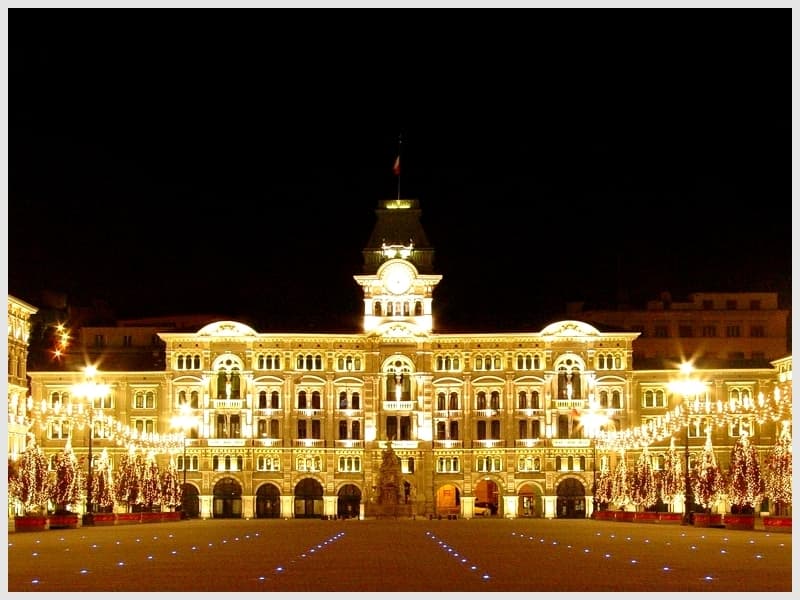
Piazza Unità d'Italia
Landmark
Europe's largest square open to the sea, surrounded by imposing neoclassical palaces. In the evening, when locals gather for aperitivo, it reveals its true Triestine character far from the tourist throng.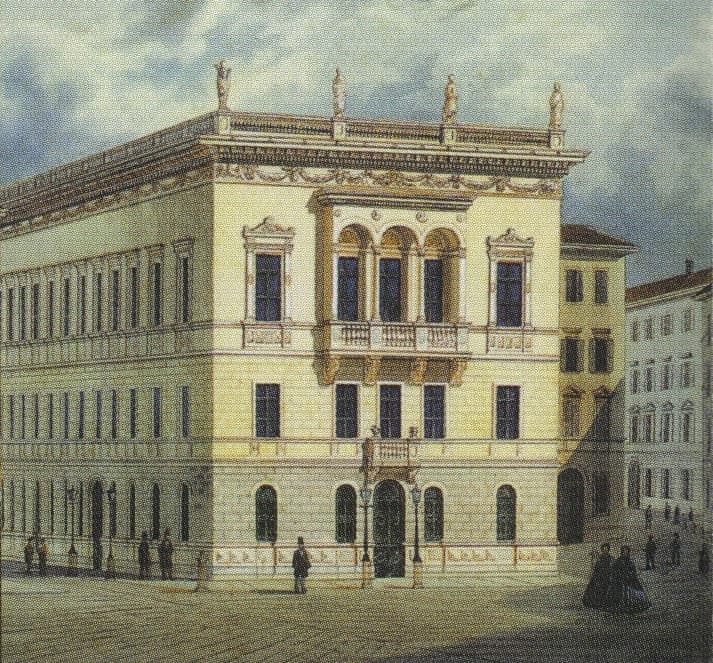 Wikipedia (it) - CC BY-SA
Palazzo Revoltella – Museo Civico d'Arte Moderna
Landmark
Baron Revoltella's palace transformed into a museum of modern art with a contemporary wing by Carlo Scarpa. The permanent collection spans Italian art from the nineteenth century to the present, housed within a remarkable architectural setting. Wikipedia (it) - CC BY-SA
Arco di Riccardo
Landmark
Roman arch dating to the first century BC, one of the rare ancient gates still standing in the historic centre. Wedged between two modern buildings, it bears witness to the layered historical strata of Trieste. Wikipedia (it) - CC BY-SA
Roman Theatre of Trieste
Landmark
1st-century Roman theatre nestled at the foot of the San Giusto hill, almost forgotten amongst the apartment buildings. An intriguing ancient remnant that recalls Trieste's former name, Tergeste. Wikipedia (en) - CC BY-SA
Canal Grande di Trieste
Landmark
Neoclassical canal excavated in the 18th century to allow ships to unload in the city centre. Today lined with cafés and the Serbian Orthodox Church of Saint Spyridon, it serves as the open-air drawing room of Triestines. Wikipedia (it) - CC BY-SA
Risiera di San Sabba
Landmark
Former Nazi concentration camp, Italy's only crematorium built during the Second World War. A national museum since 1975, this is a sobering and moving place of remembrance, essential for understanding Trieste's complex history. Wikipedia (it) - CC BY-SA
Cathedral of San Giusto
Landmark
Fourteenth-century cathedral crowning the hill of the same name, a fusion of two early Christian basilicas. Its Byzantine mosaics and fortified bell tower have dominated the city skyline for centuries. Wikipedia (it) - CC BY-SA
Faro della Vittoria
Landmark
Monumental lighthouse standing 68 metres tall, erected in 1927 as a tribute to sailors who fell during the First World War. Perched on Gretta hill, it commands a sweeping 360° panorama across the city and sea. Wikipedia (it) - CC BY-SA
Castello di San Giusto
Landmark
Venetian fortress from the 15th century commanding the old town from its eponymous hilltop. The ramparts offer 360° views over Trieste, the port and the karst landscape—visit at sunset for golden light sweeping across the gulf.Nature & parks (2)
 Wikipedia (it) - CC BY-SA
Carso Plateau
Nature
The Karst plateau stretching inland from Trieste, a lunar landscape of sinkholes, dry-stone walls and Slovenian villages. Perfect for cycling or walking, dotted with osmize — farmhouses selling local wines and cured meats. Wikipedia (it) - CC BY-SA
Val Rosandra Nature Reserve
Nature
A wild valley 15 km from Trieste, the region's only Karst gorge with a permanent watercourse. A paradise for climbers and walkers, with limestone cliffs, Roman ruins and a medieval chapel perched dramatically above.Viewpoints (2)
 Wikipedia (it) - CC BY-SA
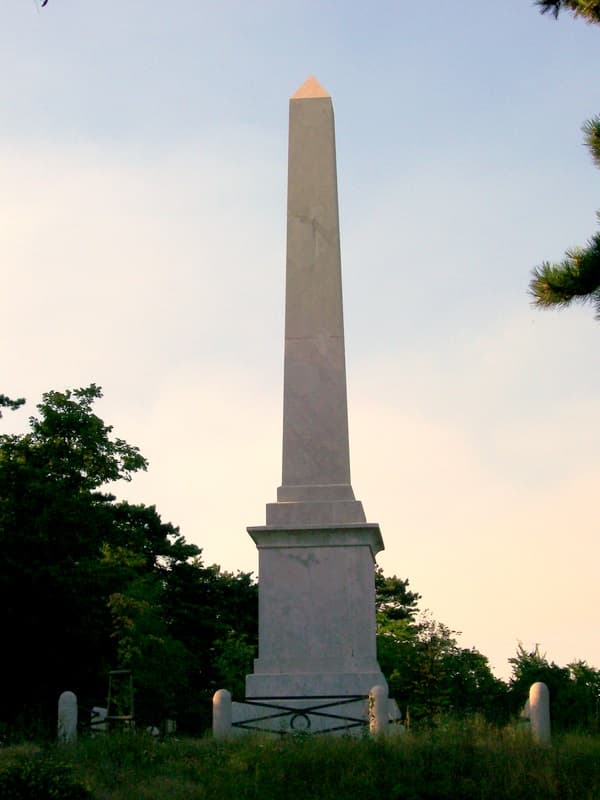
Opicina Obelisk
Viewpoint
A Napoleonic obelisk crowning the Karst plateau, the ideal vantage point to survey Trieste below and the sea stretching to the Istrian coast on clear days. Reachable by Trieste's historic tramway.Napoleonica Cliffs – Napoleonic Road
Viewpoint
A panoramic path hewn into the cliff face on Napoleon's orders, offering sweeping views over Trieste and the gulf below. Accessible on foot from the Opicina neighbourhood, it's the locals' favourite Sunday walk.Activities (5)
 Wikipedia (it) - CC BY-SA
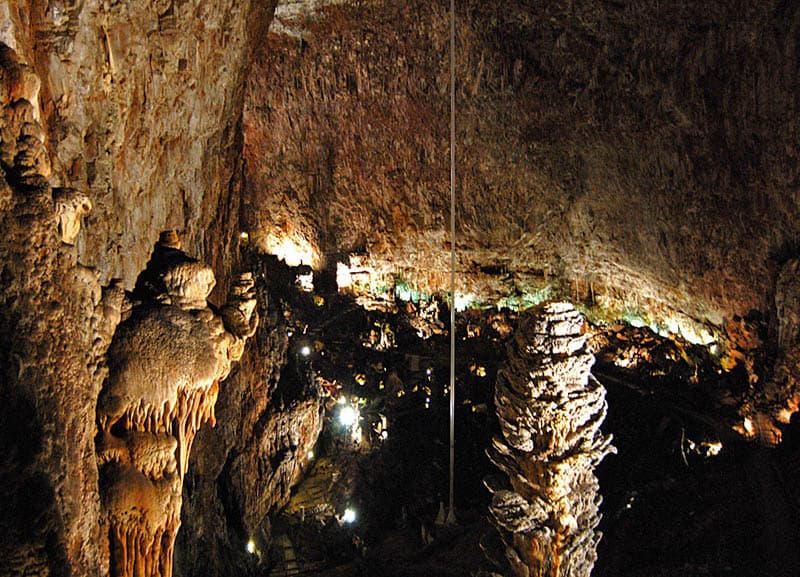
Grotta Gigante
Activity
One of the world's largest tourist caves, featuring a main chamber 107 metres high and listed in the Guinness Book of Records. Situated on the Karst plateau 15 km from the centre, it's an extraordinary geological experience.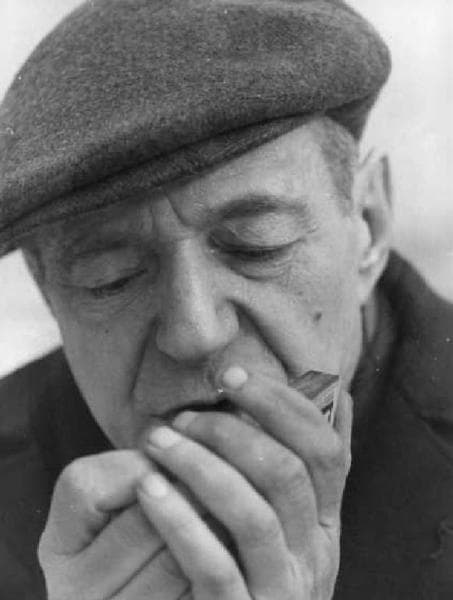 Wikipedia (it) - CC BY-SA
Umberto Saba Antiquarian Bookshop
Activity
Bookshop founded by Triestine poet Umberto Saba in 1919, one of Italy's oldest still operating today. A literary pilgrimage through a space unchanged for a century, stocked with rare editions and first printings. Wikipedia (it) - CC BY-SA
Civic Natural History Museum of Trieste
Activity
Natural history museum founded in 1846, housing a remarkable collection of karst fossils and Adriatic marine specimens. Little-visited by tourists, it remains a scientific gem housed in a neoclassical building in the centre. Wikipedia (it) - CC BY-SA
Opicina Tramway
Activity
A century-old funicular tramway (1902) connecting Trieste's centre to the Opicina Karst plateau via a spectacular rack section. One of Europe's most picturesque public transports, beloved by locals. Wikipedia (it) - CC BY-SA
Trieste Maritime Museum
Activity
A maritime museum charting Trieste's history as a major port of the Austro-Hungarian Empire. Ship models, navigation instruments and rare photographic archives — essential to understanding the city's identity.