🇱🇹Lithuania · Places to discover
What to see in Vilnius?
24 places selected by the community - landmarks, nature, hidden restaurants and activities.
Vilnius is a capital city that built itself on the margins of Central Europe, long isolated behind the Iron Curtain, and this isolation paradoxically preserved an intact baroque old town. The UNESCO-listed city centre accumulates layers: Catholic cathedrals, ruined synagogues, Orthodox churches and an art scene that has occupied interior courtyards since the 1990s. The Užupis district, self-proclaimed independent republic in 1997, neatly sums up the humour and freedom of tone that characterize the city.
Spring (April to May) and early autumn offer the most pleasant conditions, well away from summer crowds. Two days suffice for the centre, three if you explore the outer districts. Vilnius is easily navigated on foot; distances are short. Avoid restaurants displaying menus translated into six languages around Cathedral Square: honest Lithuanian cooking is found a street over, with no neon sign.
Landmarks & heritage
3 places
 1Wikimedia Commons
Landmark
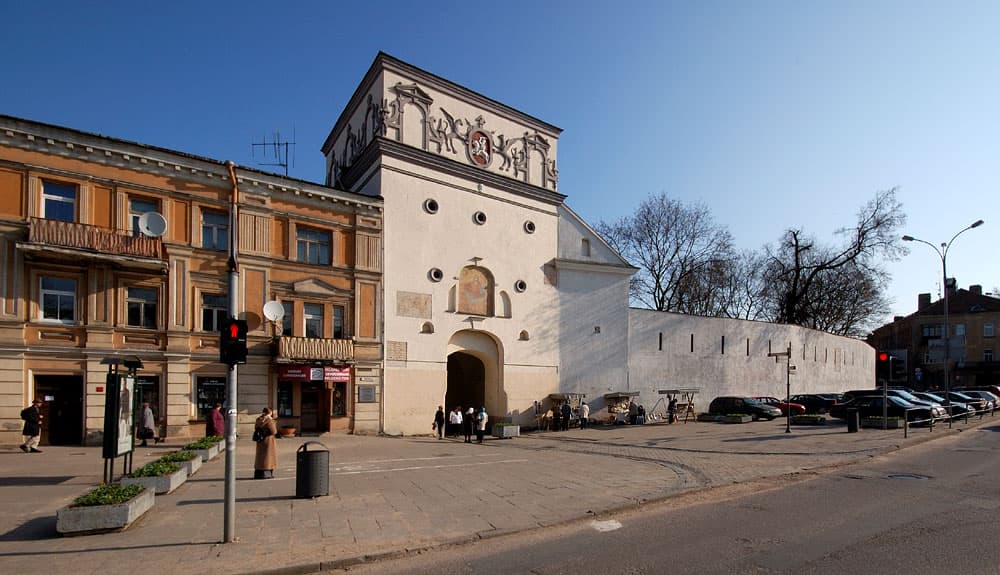
Gate of Dawn (Aušros Vartai)
The only surviving medieval gate of Vilnius's ramparts, housing a venerated chapel with the miraculous icon of the Virgin Mary. A living place of pilgrimage, not a frozen relic.
- 2
Landmark
Landmark
Jewish Quarter and Pylimo Street
Vilnius was called 'the Jerusalem of Lithuania' – this neighbourhood bears its painful and living memory. Plaques, hidden courtyards and the Gaon museum tell an essential story that few visitors take time to explore.
- 3
Landmark
Landmark
Vilnius University – Inner Courtyard
One of Eastern Europe's oldest universities (1579), whose Renaissance and Baroque inner courtyards are a well-kept secret. Enter freely from Šv. Jono Street to discover this labyrinthine campus.
Museums
1 place
- 4
Museum
Museum
National Museum of Lithuania - Arsenal Building
Housed in the former royal arsenal of the 16th century, it traces 10,000 years of Lithuanian history with remarkable archaeological collections. Less visited than major sites, but essential to understand the country.
Religious sites
5 places
 5Wikimedia Commons
Religious site
Vilnius Evangelical Lutheran Church
Discreet neoclassical façade on Vokiečių Street concealing a sober and luminous interior typical of Baltic Protestantism. Regular chamber music concerts, exceptional acoustics in an intimate setting.
 6Wikimedia Commons
Religious site
Orthodox Church of the Holy Spirit
The main Orthodox sanctuary in Lithuania, whose relics of the Vilnius martyrs have attracted pilgrims since the 14th century. Striking gilt iconostasis interior, mystical atmosphere very different from nearby Catholic churches.
 7Wikimedia Commons · CC BY-SA 3.0
Religious site
Church of Saint Anne and Bernardine Church
Masterpiece of flamboyant Gothic in red brick, said to have moved Napoleon who wished to carry it away in his pocket. The contrast with the Renaissance Bernardine church just behind is striking.
 8Wikimedia Commons · CC BY-SA 4.0
Religious site
Vilnius Cathedral and Bell Tower
The spiritual and architectural heart of the city, the neoclassical cathedral dominates the main square. The detached medieval bell tower is the absolute icon of Vilnius – climb it for a breathtaking view over the old town.
- 9
Religious site
Religious site
Church of Saints Peter and Paul
Vilnius's most stunning Baroque interior: over 2,000 white stucco figures adorn every centimetre of the nave. Locals simply call it 'the white one' – a visual shock guaranteed.
Castles & fortresses
3 places
 10Wikimedia Commons · CC BY-SA 4.0
Castle
Gediminas Hill and Castle
Fourteenth-century Gothic tower perched on a hilltop offering Vilnius's most celebrated panorama. The climb on foot through the forest path is as rewarding as the view from the summit.
- 11
Castle
Castle
Verkiai Forest and Manor Park
An immense natural park to the north of the city with a romantic ruined neoclassical manor overlooking the confluence of the Neris and Žalia rivers. Wild hiking just 20 minutes from the centre, frequented almost exclusively by locals.
- 12
Castle
Castle
Palace of the Grand Dukes of Lithuania
Majestic reconstruction of the royal palace destroyed by the Russians in the 19th century, reopened in 2018. In situ archaeological collections and Renaissance interior recreations make it a captivating national history museum.
Nature
2 places
- 13
Nature
Nature
Žirmūnai Lake
A small neighbourhood lake to the north of the city where locals swim in summer and skate in winter. No tourists, volleyball courts, barbecues in the evening – authentic local life.
- 14
Nature
Nature
Vilnelė River and Bernardinai Trail
A walk along the small Vilnelė river from Bernardinai gardens to Užupis – the preferred route for morning joggers and walkers. Dense vegetation, ancient bridges and views of church spires.
Parks & gardens
2 places
- 15
Park
Park
Bernardine Gardens
Restored historic gardens at the foot of Gediminas Castle, with fountains, rose garden and views over the Church of Saint Anne. The favourite spot of Vilnius families on Sunday mornings.
- 16
Park
Park
Vingis Park
Green lung of Vilnius, a sprawling riverside park where the Neris meanders and residents run, picnic and gather at weekends. In summer, the main stage hosts free concerts and the Lithuanian National Song.
Viewpoints
3 places
- 17
Viewpoint
Viewpoint
Vilnius Television Tower
At 326 metres, the tallest structure in the Baltic states and a symbol of Lithuanian resistance on 13 January 1991 against the Soviet army. The panoramic platform at 165m offers a 360° view over the city and its forests.
- 18
Viewpoint
Viewpoint
Tauras Hill and Viewpoint
Verdant hill in the Naujamiestis district offering clear views over the old town and modern towers. A favourite photo spot for locals in the evening, away from tourist crowds.
- 19
Viewpoint
Viewpoint
Three Crosses Hill (Trys Kryžiai)
Three white crosses dominating the city from a wooded hilltop, a symbol of national resistance reconstructed after their destruction during the Soviet period. Panoramic view over the old town particularly beautiful at sunset.
Activities
4 places
 20Wikimedia Commons · CC BY-SA 4.0
Activity
Republic of Užupis
Artists' quarter self-proclaimed as an 'independent republic' on 1 April 1997, with its own constitution engraved on plaques in 60 languages. Authentic bohemian atmosphere, improvised galleries and murals at every street corner.
- 21
Activity
Activity
Naujamiestis Quarter – Pylimo Street and Surroundings
A bohemian new neighbourhood with independent cafés, bookshops, tattoo studios and pop-up galleries in rehabilitated Soviet-era buildings. Creative Vilnius today, far from conventional tourist circuits.
- 22
Activity
Activity
Pamėnkalnio Gallery Art Centre
Independent gallery nestled in a courtyard of the old town, with a discerning programme of contemporary Lithuanian artists. Frequently free entry, intimate atmosphere appreciated by locals.
- 23
Activity
Activity
Halės Market
Large Art Nouveau covered market from 1906, lively and popular, where Vilnians have shopped for generations. Local cheeses, dried mushrooms, black rye bread and babushkas selling herbs – the culinary soul of the city.
More to discover
1 place
- 24
Place
Place
Rasų Cemetery
A romantic historical cemetery from the 18th century where Jonas Basanavičius, the father of the Lithuanian nation, and the heart of Józef Piłsudski are buried. A place of living memory, quite different from a typical tourist site.