🇷🇴Romania · Places to discover
What to see in Brașov?
22 places selected by the community - landmarks, nature, hidden restaurants and activities.
Brașov is a medieval town wedged between the Carpathians, built by Saxon colonists in the thirteenth century and retaining that Germanic identity in its lanes and coloured façades. The Piața Sfatului, the central square bordered by arcaded houses, sets the tone: a European provincial town at ease with itself, making no bid to imitate Prague or Vienna. The Black Church, Lutheran and imposing, reminds you that history here operates in layers.
Spring and autumn are the best seasons, before the summer influx and away from crowded winter ski runs. Two to three days suffice to explore the old town on foot and make a day trip to Sinaia or Sighișoara. The train from Bucharest is reliable and inexpensive. Skip the organised excursions to Bran Castle-the site is overrated and the journey often happens in conditions of tourist rush that spoil the experience.
Landmarks & heritage
6 places
 1Wikimedia Commons · CC BY 2.0
Landmark
Piața Sfatului
The central square of Brașov, surrounded by Saxon burgher houses with colourful façades. The Casa Sfatului (Council House) at its centre houses the city's history museum – a lively square at any hour.
 2Wikimedia Commons · CC BY 4.0
Landmark
Strada Sforii
One of Europe's narrowest streets (1.32 m at its tightest point), connecting two parallel streets since the 17th century. A secret passage still used daily by residents.
 3Wikimedia Commons · CC BY-SA 3.0
Landmark
Catherine's Gate
The only medieval gate still standing in Brașov, dating from 1559, with its characteristic four turrets. Symbol of the Saxon city, it marks the entrance to the Șchei quarter on the ramparts side.
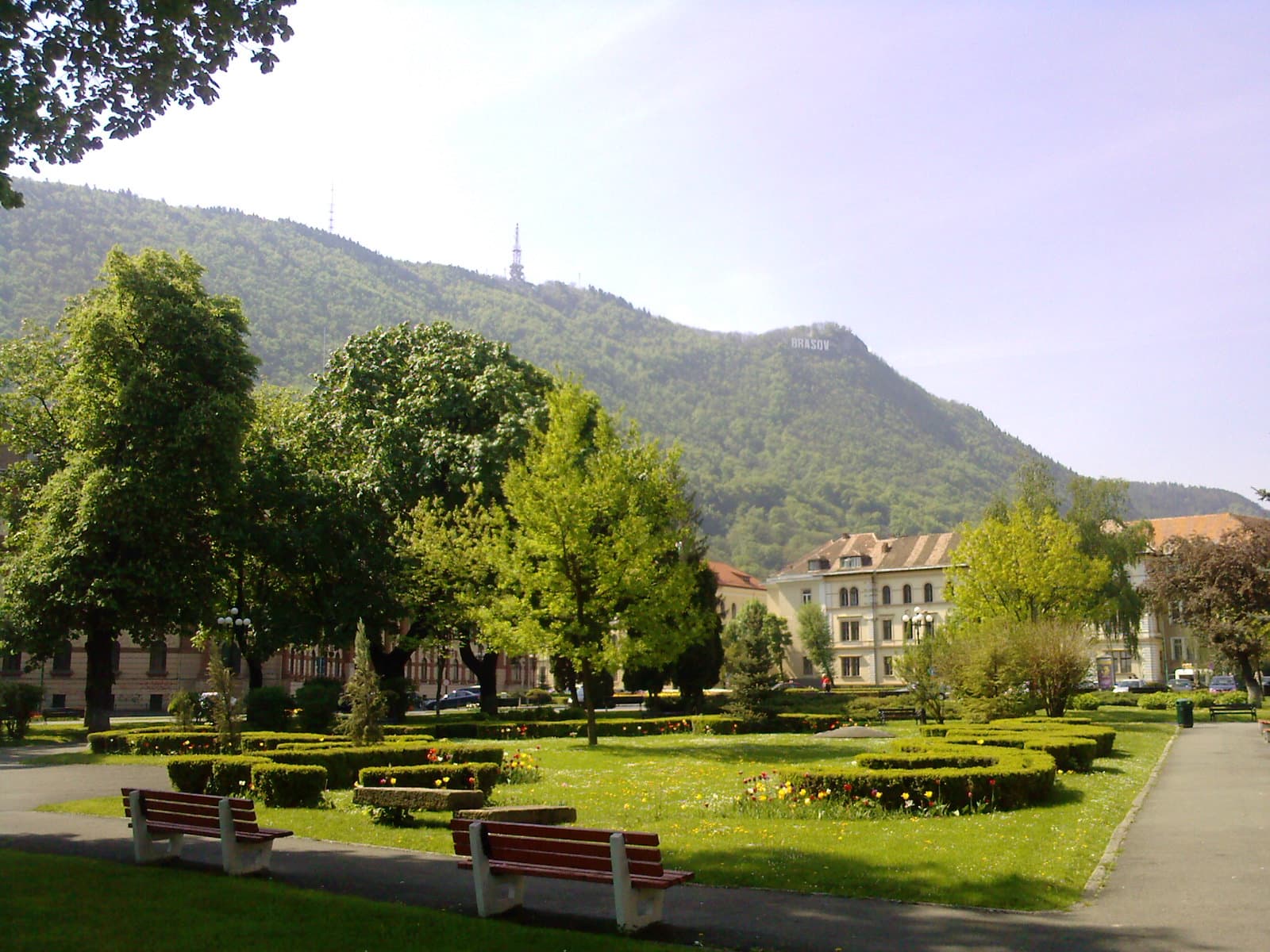 4Wikimedia Commons · CC BY-SA 3.0
Landmark
Weavers' Bastion
The best preserved of Brașov's medieval bastions, managed by the weavers' guild since the fifteenth century. Houses a modest but authentic museum on the city's fortifications.
 5Wikimedia Commons · CC BY 3.0
Landmark
Prima Școală Românească
Romania's first Romanian-language school, founded in 1495 in the Șchei neighbourhood, now a museum. It houses the first Bible printed in Romanian – a foundational site of national culture.
- 6
Landmark
Landmark
Bastionul Fierarilor
The Blacksmiths' Bastion from the 15th century, one of the best-preserved elements of Brașov's defensive system. Less visited than the Weavers' Bastion, it offers views of the ramparts and Șchei district without the crowds.
Museums
1 place
- 7
Museum
Museum
Brașov Art Museum
Fine Arts Museum housed in the former Czell residence, with a collection of 19th and 20th-century Romanian painting often overlooked. Intimate setting and very affordable admission – a quality museum without queues.
Religious sites
3 places
 8Wikimedia Commons · CC BY 2.0
Religious site
Biserica Neagră
The largest Gothic church in South-Eastern Europe, built between 1383 and 1477. Its 17th-century Anatolian carpets hung on the interior walls are unique in the world – a detail few visitors notice.
 9Wikimedia Commons · CC BY-SA 4.0
Religious site
Brașov Synagogue
Neo-Moorish synagogue built in 1901, testament to Brașov's historic Jewish community. Rarely open for spontaneous visits but visible from outside – a remarkable architectural edifice, little publicised.
- 10
Religious site
Religious site
Church of St Nicholas in Șchei
Orthodox church in the Romanian quarter of Șchei, founded in the fourteenth century, with remarkable exterior frescoes. Adjacent to the first Romanian school in the country, dating from 1495, equally worth a visit.
Castles & fortresses
1 place
- 11
Castle
Castle
Cetățuia Brașovului
17th-century fortress perched on Citadel Hill, accessible on foot from the old town. The panoramic view over Brașov's red roofs and the Carpathians is among the finest in Transylvania.
Nature
3 places
 12Wikimedia Commons · CC BY 3.0
Nature
Poiana Brașov - Ruia Slope
Romania's best-known ski station, 13 km from the centre, and also a popular destination for summer forest walks among coniferous trees. Outside the season, the ski lifts serve hikers and mountain bikers.
- 13
Nature
Nature
Lacul Noua
A small artificial lake in Noua park, east of Brașov, surrounded by lawns and sports fields. The preferred weekend retreat for Brașov families, away from tourist bustle.
- 14
Nature
Nature
Pădurea Bogății Forest
Dense communal forest on the northern edge of Brașov, ideal for a morning walk away from tourist circuits. Locals come here to forage for mushrooms in autumn and breathe in the resinous air.
Viewpoints
3 places
- 15
Viewpoint
Viewpoint
Warthe Hill - Cross on Tâmpa
A hiking trail leading to the large illuminated cross visible from across the city, on the western flank of Tâmpa. Less frequented than the summit, it offers a side view of the old town and bastions at golden hour.
- 16
Viewpoint
Viewpoint
Panorama from Melcilor Hill
Little-known hilltop to the north-west of the old town offering an unobstructed view over Brașov and Mount Tâmpa without the crowds. Accessible via an informal path from the Șchei quarter – a local secret.
- 17
Viewpoint
Viewpoint
Tâmpa Summit
The emblematic peak dominating Brașov at 960 m, accessible on foot in 45 minutes from the old town or by cable car. From the top, the view of the city and the southern Carpathians is spectacular.
Activities
4 places
 18Wikimedia Commons
Activity
Tâmpa Cable Car
The historic cable car up Mount Tâmpa, reaching the summit in minutes from the city centre. A charming Soviet-era structure in operation since 1971, offering an original ascent with views over the ramparts.
- 19
Activity
Activity
Piața Agroalimentară Brașov (Piața Centrală)
Brașov's large covered market where regional producers sell cheese, cured meats, vegetables and artisanal palincă. Arrive early in the morning to experience genuine Brașov life and taste brânză de burduf.
- 20
Activity
Activity
Brașov Hippodrome
The Brașov hippodrome, one of Romania's oldest, hosts races on weekends from May to October. An authentic, popular experience, very much frequented by locals and virtually unknown to tourists.
- 21
Activity
Activity
Sub Tâmpa Park - Ramparts Trail
A pedestrian walk along the ancient medieval ramparts at the foot of Mount Tâmpa, connecting the bastions. A 2 km route locals take in the morning for fresh air, away from tourist groups.
More to discover
1 place
- 22
Place
Place
Strada Mureșenilor
A pedestrian street linking Piața Sfatului to the train station, lined with beautiful Art Nouveau façades and local shops. The everyday shopping heart of Brașov, far from souvenir boutiques – ideal for observing urban life.