
🇪🇸 Spain · Places to discover
What to see in Burgos ?
21 places curated by Hozy - landmarks, nature, hidden restaurants and activities.
MAP · OVERVIEW
Burgos developed around the Camino de Santiago and the Reconquista, and this dual identity remains legible in its stones. The Gothic cathedral, begun in 1221, dominates the city with an architectural precision that is anything but accidental: Burgos was wealthy, powerful, and wanted that understood. The twelfth-century royal foundation of Las Huelgas monastery confirms this quiet ambition.
Spring or early autumn remains the best time to visit: Castilian summer is brutal, the winter cutting. Two days suffice to see the essentials without rushing. Burgos is best explored on foot from the historic centre; cars add nothing. Skip the restaurants clustered around the cathedral: the local morcilla deserves better than these terraces calibrated for hurried tourists.
Landmarks & heritage (8)
 Wikipedia (en) - CC BY-SA
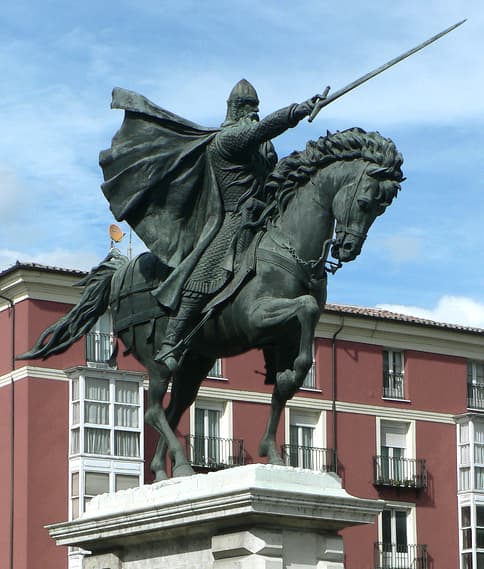
Solar del Cid
Landmark
The supposed birthplace of Rodrigo Díaz de Vivar, El Cid Campeador, marked by a sculpted monument. A symbolically charged location essential for understanding Burgalese and Castilian identity. Wikipedia (es) - CC BY-SA
Monastery of Santa María la Real de Las Huelgas
Landmark
A Cistercian monastery founded in 1187 by Alfonso VIII, serving as the royal necropolis of Castilian kings. The medieval textiles preserved here rank amongst Europe's finest surviving examples. Wikipedia (es) - CC BY-SA
Church of San Nicolás de Bari
Landmark
A modest 15th-century Gothic church housing a stone altarpiece sculpted by Francisco de Colonia, considered among Spain's finest. Often overshadowed by the nearby cathedral, this is a gem well worth discovering. Wikipedia (es) - CC BY-SA
Museo de la Evolución Humana
Landmark
A world-class museum dedicated to human evolution, intimately connected to the UNESCO-listed sites of Atapuerca. Striking contemporary architecture by Juan Navarro Baldeweg makes this essential viewing for understanding European origins. Wikipedia (es) - CC BY-SA
Arco de Santa María
Landmark
The city's former fortified gate on the Arlanzón riverbank, now transformed into a municipal museum featuring frescoes depicting Burgos's great historical figures. Its remarkable Renaissance façade opens directly onto the Paseo del Espolón. Wikipedia (es) - CC BY-SA
Cathedral of Santa María de Burgos
Landmark
A Gothic masterpiece inscribed on UNESCO's World Heritage List, its construction spanned three centuries. The Capilla del Condestable and the tomb of El Cid Campeador make it an unmissable sight. Wikipedia (es) - CC BY-SA
Cartuja de Miraflores
Landmark
A flamboyant Gothic charterhouse dating from the 15th century, housing the sculpted tombs of John II and Isabella of Portugal, masterwork of Gil de Siloé. An architectural gem often overlooked by time-pressed visitors. Wikipedia (es) - CC BY-SA
Castillo de Burgos
Landmark
A medieval fortress commanding the city from the hilltop, featuring an underground museum within the former cisterns. The panoramic vista across Burgos and its cathedral alone justifies the climb.Nature & parks (3)
 Wikipedia (es) - CC BY-SA
Parque de Fuentes Blancas
Nature
A large natural park east of the city, the ideal starting point for a riverside walk to Cartuja de Miraflores along the Arlanzón. Pine forests, picnic areas and complete peace just ten minutes from the centre. Wikipedia (es) - CC BY-SA
Ribera del Arlanzón
Nature
A scenic riverside path tracing the waterway through the city, ideal for a morning stroll past medieval bridges and parks. Local residents jog and walk here daily, far removed from the main tourist trails.Parque de la Isla
Nature
A municipal park beside the Arlanzón, a verdant retreat featuring roaming peacocks and tranquil atmospheres well away from the city centre's bustle. A weekend favourite with local families.Viewpoints (3)
 Wikipedia (es) - CC BY-SA
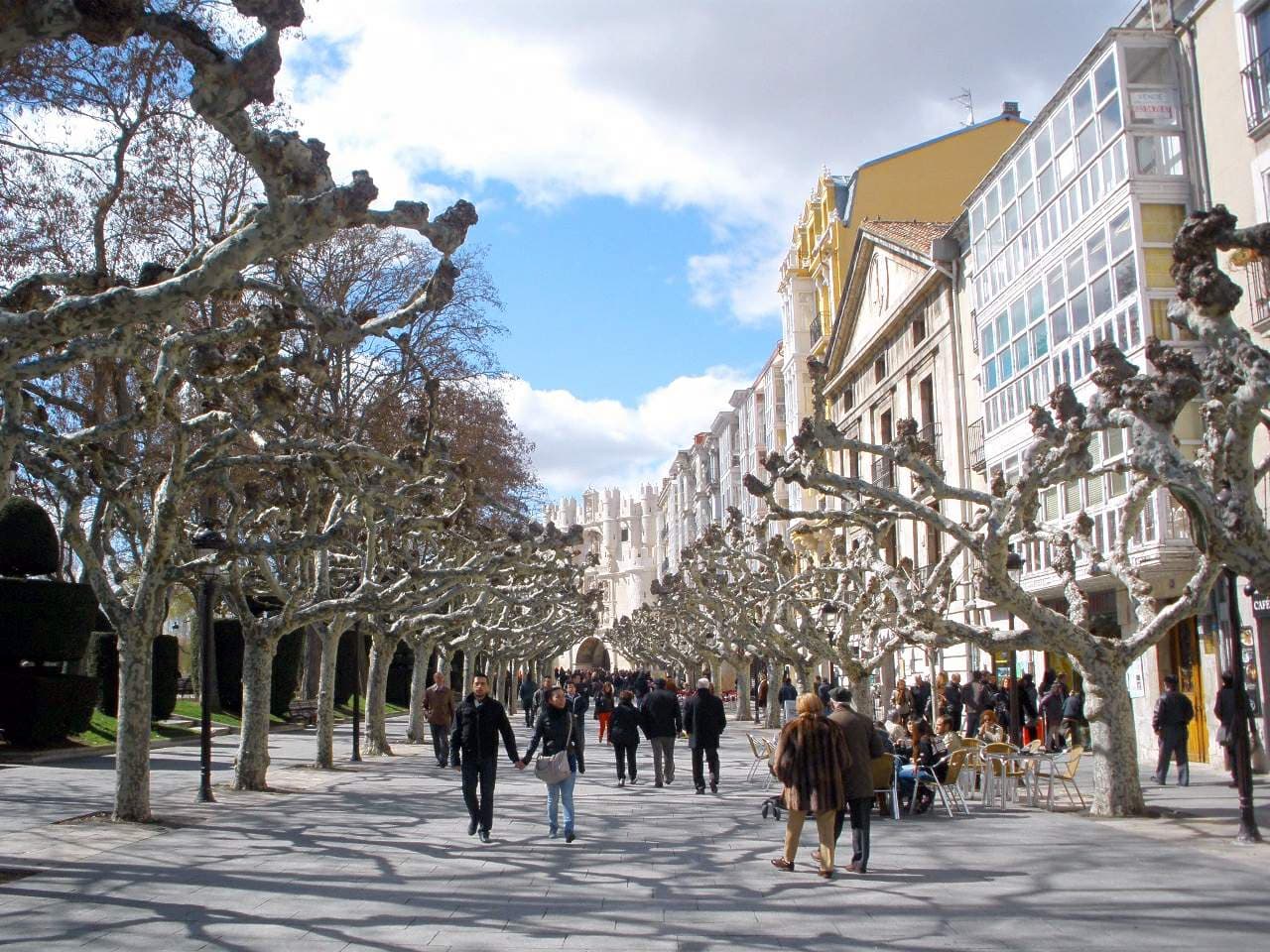
Paseo del Espolón
Viewpoint
A shaded historic promenade along the Arlanzón, the authentic open-air living room where locals gather for aperitivo hour. A Belle Époque bandstand and classical statuary make this a genuine heart of city life.Viewpoint of the Ermita de San Miguel
Viewpoint
A discreet vantage point on the castle hill, favoured by locals for striking upward-angle photographs of the cathedral. Less well-known than the main viewpoint, it offers a unique perspective on the Gothic spires.Mirador del Castillo
Viewpoint
A hilltop viewpoint offering the most complete panorama across Burgos, its cathedral and the Castilian plains. An exceptional vantage point for sunset views over the old town's rooftops.Activities (4)
 Wikipedia (es) - CC BY-SA
Teatro Principal de Burgos
Activity
Neoclassical theatre from the 19th century at the heart of the city, offering a varied programme of theatre, music and dance throughout the year. Check the online box office for authentically local cultural evenings. Wikipedia (es) - CC BY-SA
Mercado de Abastos de Burgos
Activity
The municipal covered market where restaurateurs and local housewives shop, featuring stalls of fresh morcilla, cheeses and vegetables from the Meseta. Ideal to visit in the morning to feel the pulse of the city. Wikipedia (es) - CC BY-SA
Retablo Museum
Activity
Specialised museum devoted to Spanish altarpieces from the Middle Ages and Renaissance, housed within the church of San Esteban. A unique collection in Spain, set within beautifully preserved Gothic surroundings and mercifully free from crowds. Wikipedia (es) - CC BY-SA
Camino de Santiago – Urban Stage through Burgos
Activity
Walking the few kilometres of the Camino Francés that traverse Burgos allows you to experience the pilgrimage firsthand, surrounded by fellow walkers, yellow arrows and the unique atmosphere of the road. Departs from the Puerta de San Juan.More to discover (3)
 Wikipedia (es) - CC BY-SA
Plaza Mayor de Burgos
Place
The heart of Burgos' social life, lined with Baroque arcades, animated terraces and seasonal markets. Less grand than Madrid's, but far more authentic in its everyday usage and local character. Wikipedia (es) - CC BY-SA
Puente de San Pablo
Place
Medieval bridge adorned with monumental statues representing the companions of El Cid, spanning the Arlanzón opposite the Museo de la Evolución Humana. An unmissable spot for walking and photography, especially at dusk.San Pedro de la Fuente Quarter
Place
Popular medieval neighbourhood on the left bank of the Arlanzón, characterised by cobbled streets, houses with flower-bedecked balconies and the Romanesque church of San Pedro. A village atmosphere remarkably well preserved, just a stone's throw from the centre.