
🇪🇸 Spain · Places to discover
What to see in Formentera ?
24 places curated by Hozy - landmarks, nature, hidden restaurants and activities.
MAP · OVERVIEW
Formentera can be summed up in a few figures: 20 kilometres long, zero traffic lights, a single main road. The smallest of the Balearic Islands still operates to a rhythm dictated by ferries and tides. The waters of Es Pujols and Ses Illetes owe their transparency to seagrass meadows classified as world heritage, a fragile ecosystem that determines everything you can do there.
The ideal window falls between May and June, before the summer crowds transform the beaches into an extension of Ibiza. Allow three to five days, no more: you can traverse the entire island by bicycle, the obvious transport method available as soon as you leave the La Savina ferry. The classic pitfall is booking a hotel on the north coast and spending your days in cocktail beach clubs-you'll then miss the interior, with its windmills and dry-stone paths.
Landmarks & heritage (8)
 Wikipedia (ca) - CC BY-SA
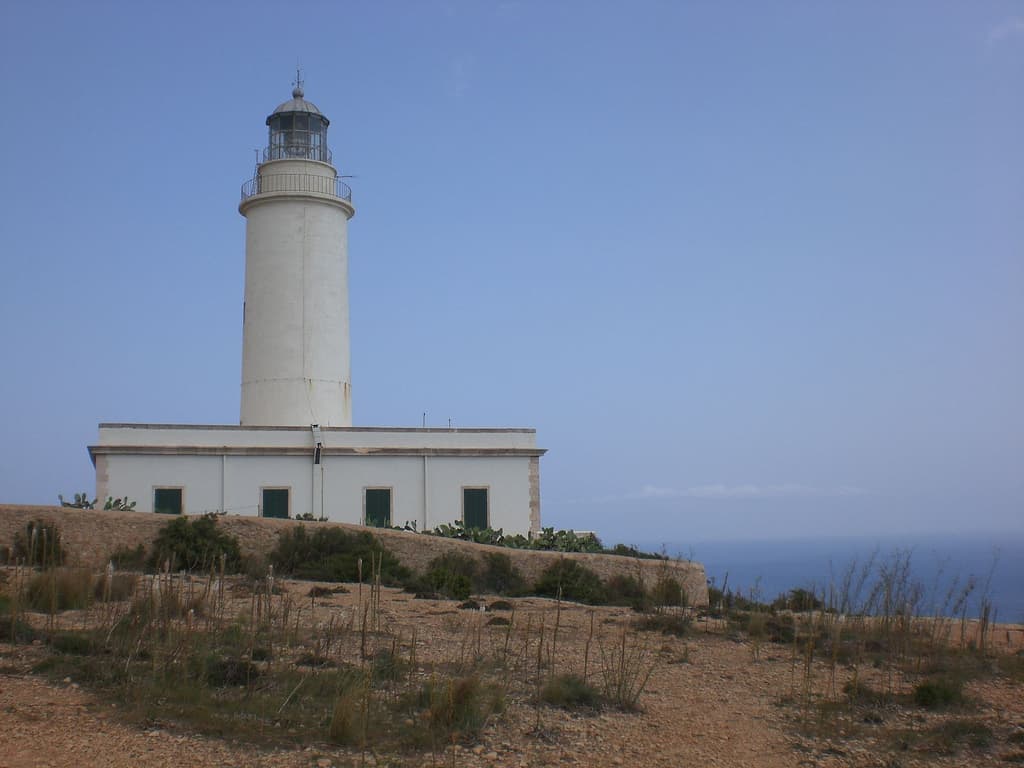
Far de la Mola
Landmark
Nineteenth-century lighthouse perched 192 metres high at the island's eastern extremity. Jules Verne allegedly drew inspiration from it for 'Hector Servadac'. Vertiginous views across the Mediterranean and dramatic cliffs. Wikipedia (ca) - CC BY-SA
Megalit de Ca na Costa
Landmark
A megalithic burial chamber dating to 1800 BC, among the Balearic Islands' best-preserved prehistoric monuments. A moving testament to the island's earliest inhabitants, standing alone in open countryside. Wikipedia (ca) - CC BY-SA
Torre des Garroveret (Far de Barbaria)
Landmark
Eighteenth-century defensive tower at the island's southern tip, adjacent to Barbaria lighthouse. A truly remote spot facing Africa, with absolutely stunning sunsets. Wikipedia (ca) - CC BY-SA
Church of Sant Francesc Xavier
Landmark
Fortified eighteenth-century church at the heart of Formentera's main village. Typical white architecture of the Pityusic Islands, with thick walls built to withstand Barbary raids.Museu Etnològic de Formentera
Landmark
A modest museum housed in a traditional rural dwelling in Sant Francesc. Agricultural tools, local dress and everyday objects chart life before tourism arrived, presented with understated elegance.Torre des Pi des Català
Landmark
An 18th-century coastal tower accessible only on foot from Es Caló. A wild, unspoilt walk skirts craggy coves and nearly deserted creeks—one of Formentera's most secluded rambles.Torre de sa Gavina
Landmark
A 17th-century watchtower perched on the north-eastern coast, among the island's finest examples. Reached on foot via a coastal path, it commands sweeping views across to Ibiza and the surrounding islets.Church of Sant Pere Apòstol (El Pilar de la Mola)
Landmark
A small whitewashed 18th-century church at the heart of La Mola's plateau. An authentically preserved village, untouched by mass tourism, with an artisanal market on Wednesdays and Sundays.Nature & parks (3)
 Wikipedia (ca) - CC BY-SA
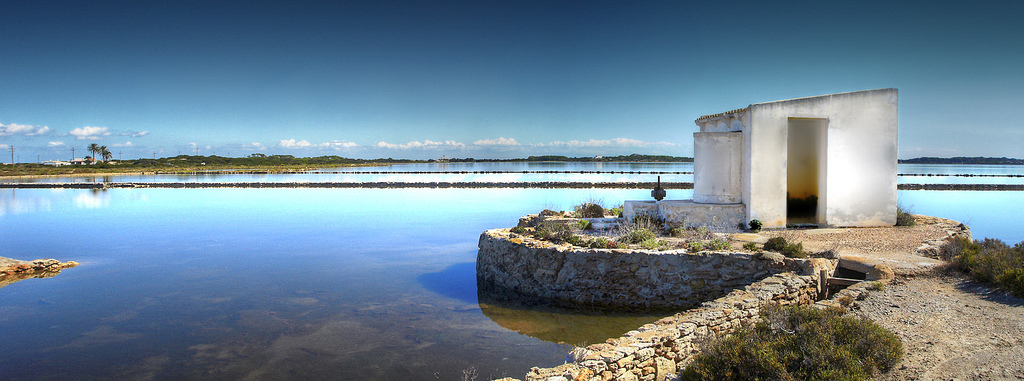
Estany Pudent
Nature
A 400-hectare salt lagoon designated a UNESCO Biosphere Reserve. A birdwatcher's paradise where pink flamingos, herons and waders congregate, ringed by virtually flat cycling trails. Wikipedia (ca) - CC BY-SA
Cap de Barbaria
Nature
The wild, windswept southern tip—where the world ends. Dwarf pines, limestone outcrops and absolute silence evoke pre-tourism Formentera, just 20 minutes' cycling from the centre. Wikipedia (ca) - CC BY-SA
Ses Salines de Formentera
Nature
Ancient salt ponds straddling Formentera and Ibiza, at the heart of Ses Salines Natural Park. The turquoise shallows shimmer in pink and violet hues depending on the hour—almost unreal in their beauty.Viewpoints (3)
Punta des Trucadors
Viewpoint
The northern tip of the sand isthmus, 200m from Ibiza. You can almost swim to the neighbouring island. Sunset facing the salt pans with both islands in silhouette: an iconic image of the Pitiuses.La Savina Port at Sunrise
Viewpoint
The island's only port springs to life at dawn as fishermen return. Colourful boats, the smell of coffee at the port bar, golden light on the salt pans: Formentera before the ferry tourists arrive.Mirador Racó de sa Pujada
Viewpoint
A natural vantage point on La Mola's northern cliffs, reached via a footpath from Es Caló. A sheer drop to emerald waters reveals the seagrass meadows below, untouched by tourist infrastructure.Activities (5)
Camí de la Mola (GR-2)
Activity
Historic hiking trail linking Es Caló to the La Mola plateau via the old peasant route. A gentle climb through garrigue, with views across the entire island and Ibiza in the distance.Sea Kayaking from Es Caló
Activity
Kayak departures from the small port to skirt the northern cliffs of La Mola, otherwise inaccessible. Sea caves, crystalline waters and total silence: the finest way to experience the wild coastline.Artisan Market at El Pilar de la Mola
Activity
Hippie-artisan market Wednesday and Sunday evenings in summer, on the church square. Jewellery, ceramics and handwoven textiles crafted by resident artisans: a living legacy of 1970s alternative culture.Snorkelling at Punta Prima
Activity
Rocky headland to the north-east with exceptional posidonia seagrass beds at 2-3m depth. Octopuses, greater amberjacks, sea bream and seahorses visible without a tank. Accessible on foot from Es Pujols.Bicycle Hire at La Savina
Activity
Formentera is the Balearic island best equipped with cycle paths (30km marked). Renting a bike at the port on ferry arrival is the local instinct: flat, safe, and the only way to see everything.Beaches (4)
 Wikipedia (ca) - CC BY-SA
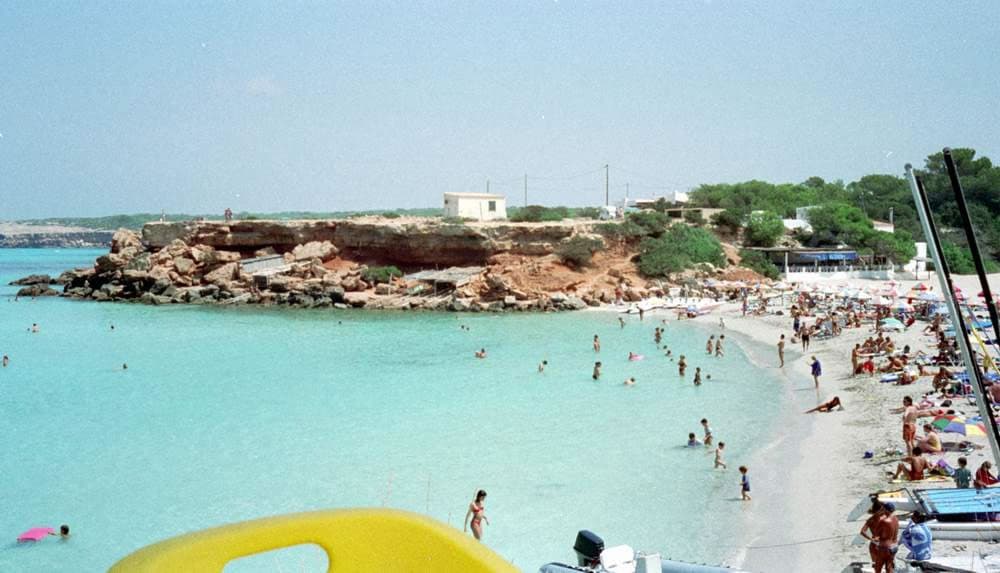
Cala Saona
Beach
The only cove on the western coast, framed by ochre cliffs and pine trees. A small, family-friendly beach with deep blue waters, perfect for snorkelling in the late afternoon once the tour groups have departed. Wikipedia (en) - CC BY-SA
Platja de Migjorn
Beach
Eight kilometres of unspoilt beach along the southern coast, entirely free of continuous development. Each section has its own character: rocky coves, dunes, naturist areas. This is the locals' beach, far removed from the beach clubs. Wikipedia (ca) - CC BY-SA
Platja de Ses Illetes
Beach
A 5km ribbon of white sand stretching across the Ses Trucadors isthmus, regularly ranked among Europe's finest beaches. The crystalline shallows, barely a metre deep, reveal seagrass beds to the naked eye.Platja de Llevant
Beach
Eastern counterpart to Ses Illetes, far quieter and wilder. The tramontane wind occasionally whips up waves here, whilst dried posidonia seagrass dunes stand as vivid reminders that this ecosystem remains very much alive.