🇪🇸Spain · Places to discover
What to see in Ibiza?
30 places selected by the community - landmarks, nature, hidden restaurants and activities.
Ibiza is not merely an island of clubs: it operates at two speeds, where the nightclubs of Playa d'en Bossa coexist with whitewashed villages perched on hillsides and coves accessible only on foot. Dalt Vila, the UNESCO-listed fortified old town, reminds you that the island carries dense Phoenician and Arab history, long before the sound systems arrived.
The best time to visit is May or September: the heat remains pleasant, prices drop and beaches feel less crowded. Three to five days on a scooter-the most practical transport here-suffice to cover the island. Avoid booking a hotel in July without checking its distance from the clubs: nights can prove short even if you've no intention of going.
Landmarks & heritage
6 places
 1Wikipedia · CC BY-SA 3.0
Landmark
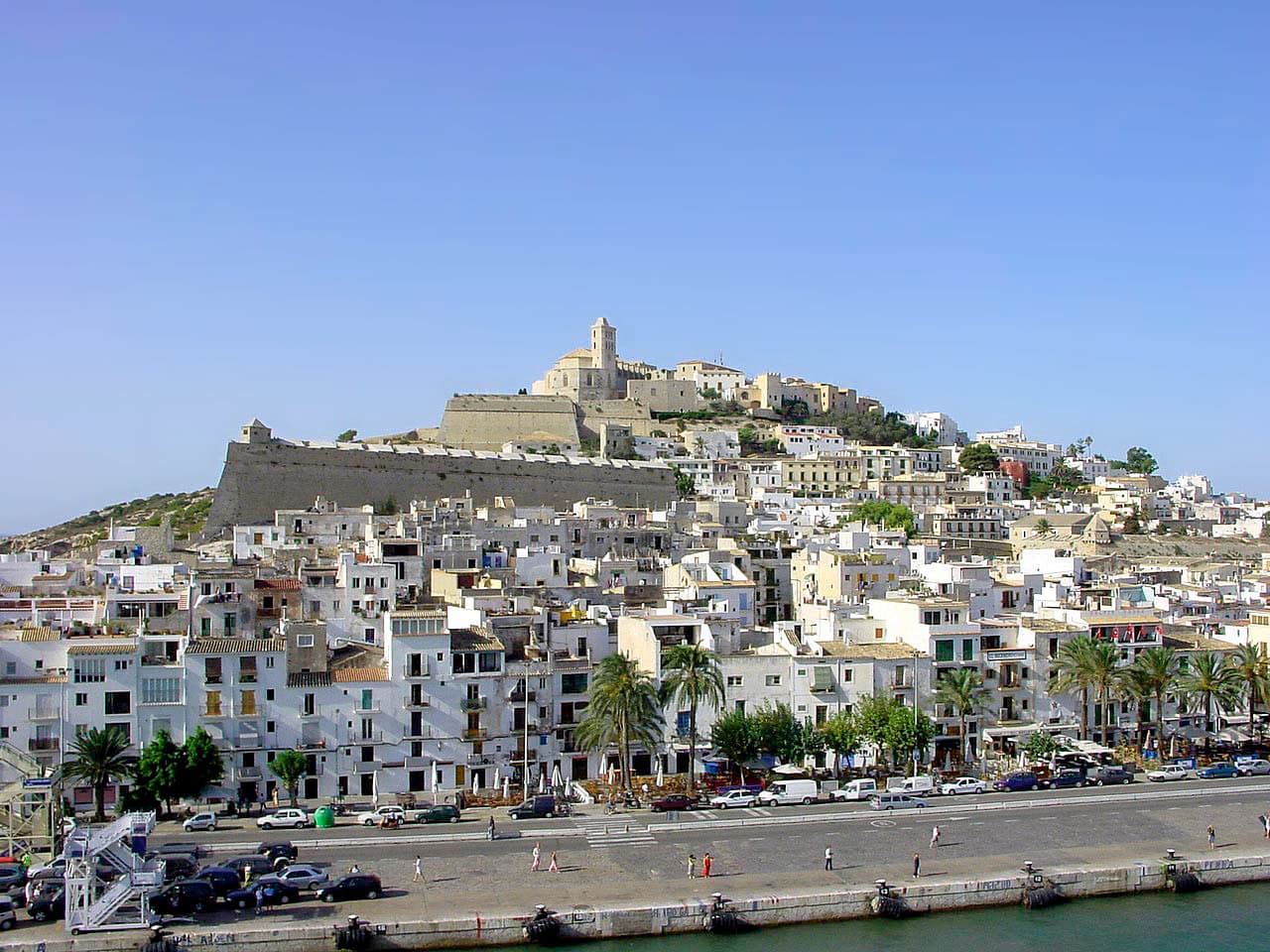
Dalt Vila – Ibiza's Fortified City
Medieval historic centre designated a UNESCO World Heritage site, perched on a rocky promontory. The 16th-century ramparts offer sweeping views over the sea and harbour. Essential at sunset.
 2Wikimedia Commons · CC BY 3.0
Landmark
Sa Caleta Archaeological Site
Spain's only Phoenician settlement preserved in situ, UNESCO-listed, dating to the 7th century BC. Remains of Phoenician houses on a cliff battered by waves. Little-known and deeply moving.
- 3
Landmark
Landmark
Torre des Pi des Català
An 18th-century coastal tower accessible only on foot from Es Caló. A wild, unspoilt walk skirts craggy coves and nearly deserted creeks—one of Formentera's most secluded rambles.
- 4
Landmark
Landmark
Tour de Santa Agnès de Corona
Hidden hamlet nestled among almond groves in the north-west, featuring a distinctive white fortress-church and views over Ibiza's most pristine agricultural plains. In February, the flowering almond trees create a rare spectacle.
- 5
Landmark
Landmark
Ses Portes Watchtower
A 16th-century watchtower at the southern tip of the island, guarding the strait between Ibiza and Formentera. A pilgrimage site for locals to watch ferries pass and observe the turquoise waters of Ses Salines.
- 6
Landmark
Landmark
Puig des Molins Necropolis
UNESCO-listed Phoenician-Punic burial site, one of the world's largest with over 3,000 rock-cut hypogea. The adjacent museum displays striking figurines and jewellery.
Museums
1 place
- 7
Museum
Museum
Archaeological Museum of Eivissa and Formentera
A small museum nestled in Dalt Vila presenting 3,000 years of Ibizan history, from the Phoenicians to the Romans. The Carthaginian collections are among the richest in the western Mediterranean.
Religious sites
3 places
 8Wikimedia Commons · CC BY-SA 4.0
Religious site
Cathedral of Mare de Déu de les Neus
A 13th-century Gothic-Baroque cathedral crowning the summit of Dalt Vila. Its bell tower is visible across Ibiza Bay. The interior houses a diocesan museum with Phoenician artefacts.
 9Wikimedia Commons
Religious site
Sant Joan de Labritja Church
Village-church in the wild north of the island, far from crowds. The whitewashed 18th-century church is surrounded by a few low houses and a village bar where locals play cards.
- 10
Religious site
Religious site
Church of Sant Carles de Peralta
A white fortified 18th-century church at the heart of the village of the same name, embodying rural Ibizan architecture. The village was a hub of hippie counterculture in the 1960s and 70s.
Nature
2 places
 11Wikimedia Commons · CC BY-SA 3.0
Nature
Cala Aubarca
Wild cove in the north accessible only on foot (45 minutes) through the scrubland. Ochre cliffs plunging into deep blue waters, zero infrastructure. Ibiza before mass tourism.
- 12
Nature
Nature
Ses Feixes Nature Reserve
Ancient Phoenician market garden system in wetland, moments from Ibiza town. Network of canals and reed beds sheltering herons and ducks, overlooked by nearly all tourists.
Parks & gardens
1 place
 13Wikimedia Commons · CC BY-SA 3.0
Park
Ses Salines Natural Park
Protected nature reserve straddling Ibiza and Formentera, featuring pink salt marshes frequented by flamingos. The crystalline waters of adjacent beaches are classified as UNESCO Posidonia meadows.
Viewpoints
4 places
 14Wikimedia Commons · CC BY-SA 3.0
Viewpoint
Cala d'Hort and Es Vedrà Viewpoint
Small wild cove facing the mythic Es Vedrà rock, a 382m limestone monolith rising from the sea. Locals gather at fish chiringuito terraces to watch the sunset from this dramatic vantage point.
- 15
Viewpoint
Viewpoint
Mirador Racó de sa Pujada
A natural vantage point on La Mola's northern cliffs, reached via a footpath from Es Caló. A sheer drop to emerald waters reveals the seagrass meadows below, untouched by tourist infrastructure.
- 16
Viewpoint
Viewpoint
Sunset at Café del Mar – Sant Antoni
Legendary terrace that invented the concept of musical sunset in 1980. Less exclusive than before, but the panorama over the sea and ambient DJ sets remain a foundational Ibiza experience.
- 17
Viewpoint
Viewpoint
Sa Talaia Viewpoint
Ibiza's highest point at 475m, accessible on foot from Sant Josep in 1.5 hours' walking. On clear days, Majorca lies to the north and the Spanish mainland beyond. An absolutely breathtaking 360° view.
Activities
7 places
 18Wikimedia Commons · CC BY-SA 4.0
Activity
Hippie Market Las Dalias – Sant Carles
Most authentic of Ibiza's hippie markets, running since 1954 in an oleander garden. Jewellery, fabrics, spices and live music on Saturdays. Summer evenings feature flamenco concerts.
- 19
Activity
Activity
Camí de la Mola (GR-2)
Historic hiking trail linking Es Caló to the La Mola plateau via the old peasant route. A gentle climb through garrigue, with views across the entire island and Ibiza in the distance.
- 20
Activity
Activity
Sea Kayaking from Es Caló
Kayak departures from the small port to skirt the northern cliffs of La Mola, otherwise inaccessible. Sea caves, crystalline waters and total silence: the finest way to experience the wild coastline.
- 21
Activity
Activity
Can Marçà Caves
Network of prehistoric caves in northern Ibiza overlooking the sea, once used by smugglers. Spectacular formations, underground lake and interplay of light. Guided tour of 35 minutes.
- 22
Activity
Activity
Kayak Hire at Cala Llonga
Ideal starting point to explore the east coast by kayak, with access to marine caves and coves unreachable on foot. Calm morning waters allow you to paddle along the red sandstone cliffs.
- 23
Activity
Activity
Snorkelling at Ses Salines – Platja des Cavallet
UNESCO-classified Posidonia seagrass meadows offer exceptional marine biodiversity: cuttlefish, octopuses, bream, seahorses. Crystal-clear shallow water, ideal for simple mask and snorkel.
- 24
Activity
Activity
Sant Jordi Flea Market
Weekly market (Saturday mornings) at the Sant Jordi hippodrome, local favourite for vintage clothing, Ibizan crafts and plants. Far less commercial than the Hippie Market at Punta Arabí.
Beaches
4 places
 25Wikimedia Commons · CC BY 3.0
Beach
Cala Benirrás and Sunday Drums
North-facing cove framed by cliffs with a rock shaped like a finger pointing skyward. Every Sunday at sunset, dozens of percussionists spontaneously gather on the beach.
 26Wikimedia Commons · CC BY 3.0
Beach
Cala Conta (Cala Comte)
Collection of coves with stratified turquoise waters rivalling the Caribbean. Multiple rocky islets to swim to, and a sunset ranked among the Mediterranean's finest.
 27Wikimedia Commons · CC BY-SA 4.0
Beach
Cala Mastella
Tiny hidden cove nestled in a pinewood in the north-east, accessible by a narrow track. Emerald-green waters, frequented almost exclusively by locals and a few insiders.
- 28
Beach
Beach
Ses Illetes Beach (Ibiza side)
Tongue of white sand edging the salt pans, with shallow milky-blue waters. Less known than its twin in Formentera, it offers the same magic without the crowds. Ideal for snorkelling over Posidonia meadows.
More to discover
2 places
 29Wikimedia Commons · CC BY 3.0
Place
Sant Miquel de Balansat Village
Northern village with a fortified 14th-century church and a ballroom where traditional Ibizan folk dance (ball pagès) evenings are held in summer. Living local culture, not museum-bound.
- 30
Place
Place
Es Caló de Sant Agustí
Tiny traditional fishing harbour with colourful boats and escars—boat shelters carved directly from the rock. Fresh fish lunch with your feet in the water, well away from the crowds.
Also 🇪🇸 in Spain