
🇪🇸 Spain · Places to discover
What to see in Ségovie ?
20 places curated by Hozy - landmarks, nature, hidden restaurants and activities.
MAP · OVERVIEW
Segovia announces itself through stark contrast: a medieval Castilian town perched on a rocky outcrop, bisected by a first-century Roman aqueduct that literally divides the centre in two. The Alcázar, with its ship's-prow towers dominating the confluence of two rivers, is more than mere backdrop-it shaped the history of the Castilian crown for centuries. The town moves to its own rhythm, distant from Madrid's bustle, and you feel it from the first streets.
One day covers the essentials, but two allows you to escape the marked routes. Come in April-May or September-October to avoid the coachloads arriving from Madrid on weekends-the town sits ninety minutes by train from Chamartín. Skip the restaurants around the aqueduct; the cochinillo served in the side streets off Plaza Mayor is far superior for considerably less money.
Landmarks & heritage (11)
 Wikipedia (en) - CC BY-SA
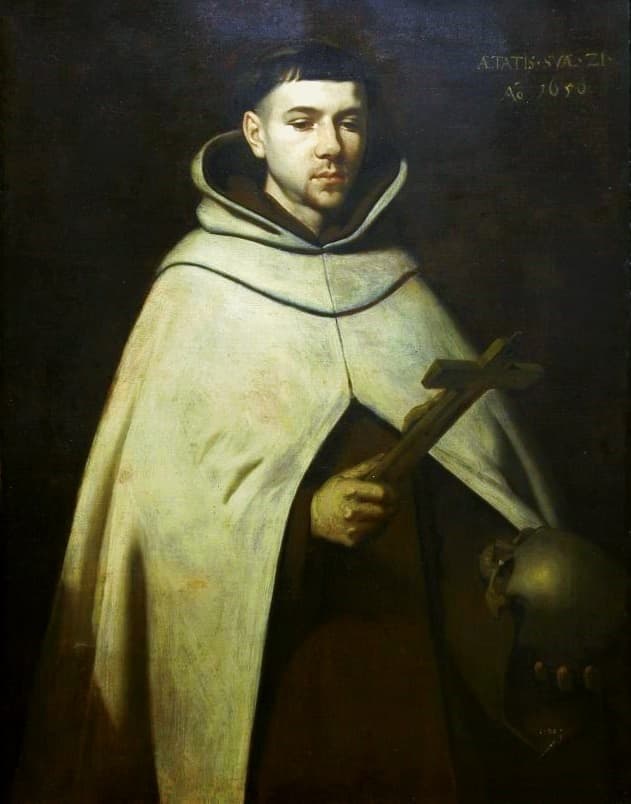
Convent of the Discalced Carmelites
Landmark
16th-century convent founded by Saint John of the Cross, where the mystic rests in a Baroque chapel. An authentic, little-visited sanctuary that illuminates the spiritual depth of Castilian devotion.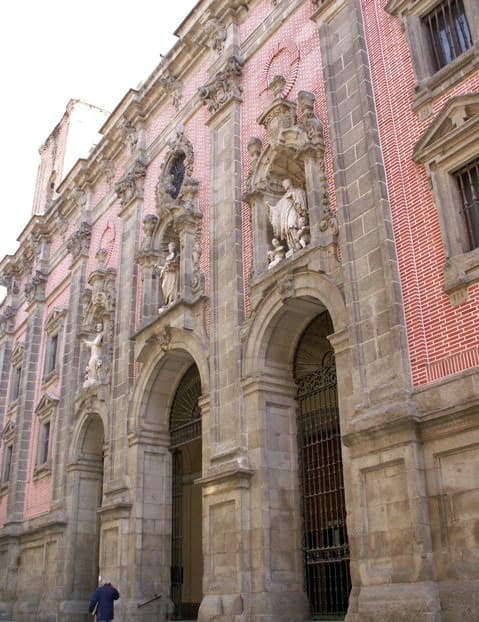 Wikipedia (en) - CC BY-SA
Church of San Millán
Landmark
One of the finest Romanesque churches across the entire Iberian peninsula, dating from the 12th century, distinguished by its three characteristic exterior porches. Often overshadowed by the cathedral, it deserves a lengthy visit. Wikipedia (en) - CC BY-SA
Church of the Vera Cruz
Landmark
A dodecagonal Romanesque church from the 13th century, built by the Templars and standing isolated in the countryside below the Alcázar. A rare example of a centrally-planned church in Castile, it also commands one of the finest views across Segovia's skyline. Wikipedia (en) - CC BY-SA
Alcázar of Segovia
Landmark
Medieval fortress shaped like a ship's prow dominating the confluence of the Eresma and Clamores rivers. Allegedly the inspiration for Cinderella's castle, its pointed towers offer an unparalleled panoramic view over the Sierra de Guadarrama. Wikipedia (en) - CC BY-SA
Church of San Esteban
Landmark
12th-century Romanesque church crowned by the most slender and elegant Romanesque bell tower in all Castile, with six storeys of Lombard arcading. Rodin reportedly called it the 'queen of bell towers' during his visit to Segovia. Wikipedia (en) - CC BY-SA
Monastery of El Parral
Landmark
A 15th-century Hieronymite monastery nestled in the Eresma valley, well away from the tourist crowds. Monks still live here, singing Gregorian offices at daily services—an atmosphere of authentic, striking medieval life. Wikipedia (fr) - CC BY-SA
House of the Peaks
Landmark
A 15th-century Gothic façade entirely covered in diamond-shaped granite points—unique to Segovia. Now an art school, it marks the entrance to the old town from the aqueduct. Wikipedia (en) - CC BY-SA
Cathedral of Segovia
Landmark
The last great Gothic cathedral built in Spain (16th century), known as the 'Lady of Cathedrals'. Its cloister, painstakingly reconstructed stone by stone from the former cathedral, is a gem often overlooked by rushed visitors.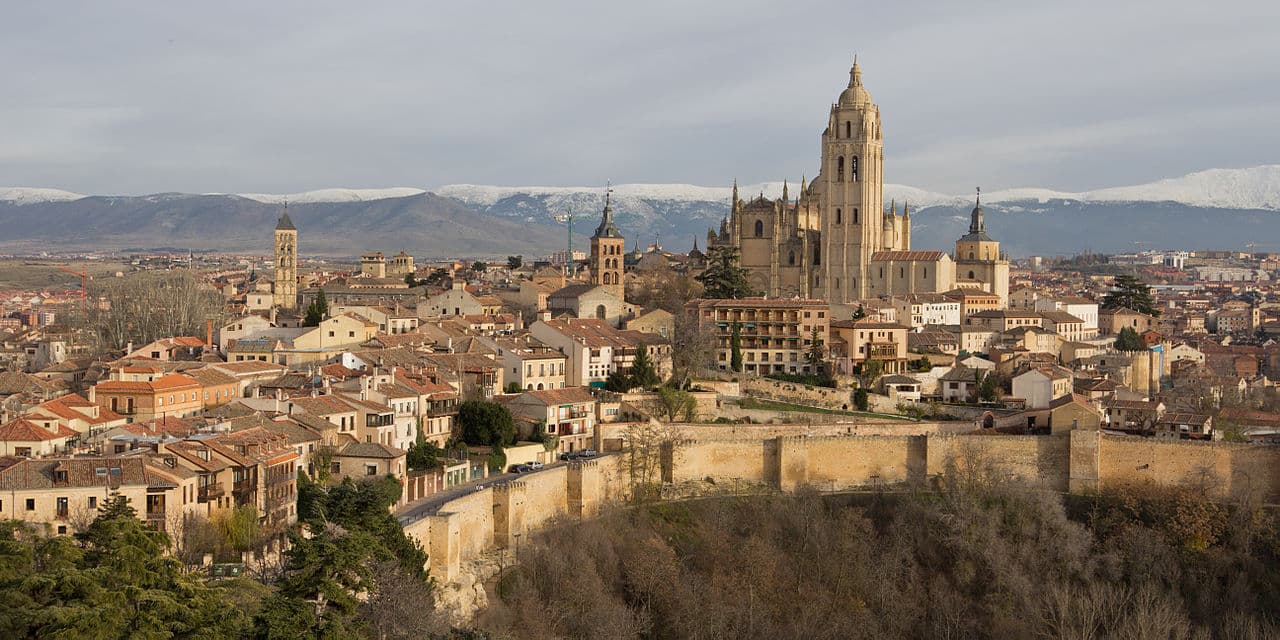 Wikipedia (en) - CC BY-SA
Walls of Segovia
Landmark
Medieval fortifications stretching over 3 km along the southern flank of the old town, largely of Roman origin but extensively rebuilt in the Middle Ages. The rampart walk between the Gate of San Andrés and the Alcázar ranks among the city's most spectacular pedestrian routes. Wikipedia (en) - CC BY-SA
Roman Aqueduct of Segovia
Landmark
Masterpiece of Roman engineering from the 1st century, 166 granite arches without mortar traversing the heart of the city. Seeing it at dawn, before the crowds arrive, is an experience outside time.Gate of San Andrés
Landmark
14th-century medieval gate in the southern ramparts, among the city's best-preserved. Passing beneath its arches marks entry into the Judería quarter and frames a handsome perspective of the fortifications.Nature & parks (1)
Viewpoints (4)
 Wikipedia (fr) - CC BY-SA
Mirador de la Pradera de San Marcos
Viewpoint
A riverside meadow along the Eresma offering the classic view of the Alcázar from below, on the northern side. Less crowded than the official viewpoints, this is where locals come for Sunday picnics.Pinarillo Viewpoint
Viewpoint
Wooded belvedere on the high ground north-west of Segovia, reached on foot from the Alcázar in 20 minutes through pine forest. Sweeping views of the snow-capped Sierra de Guadarrama in winter and the Eresma valley—virtually unknown to tourists.Cerro de la Horca
Viewpoint
A hill to the east of the old town providing a complete panorama of Segovia's profile, with the aqueduct, cathedral and Alcázar perfectly aligned. An authentic vantage point with no tourist infrastructure, frequented only by local walkers.Mirador del Valle de la Fuencisla
Viewpoint
A natural viewing point below the Alcázar, in the Clamores valley, with a direct view onto the Fuencisla sanctuary and the cliffs crowned by the fortress. The locals' favourite spot for sunset photographs.Activities (4)
Cycling Route along the Canal de Castilla
Activity
Cycle path following the historic 18th-century canal from Segovia into the Castilian countryside. Cereals plains, restored mills and locks create a picturesque landscape—bike hire is available in town for half-day outings.Mercado de Abastos de Segovia
Activity
Municipal covered market where Segovians have shopped for generations. Stalls of Churra sheep's cheese, artisanal chorizo and vegetables from the Vera de Segovia region offer an authentic window into local gastronomy.Segovian Ceramics Workshop
Activity
An artisanal pottery workshop in the old town perpetuating traditional Segovian faience techniques with Moorish geometric decoration. Watch demonstrations and buy directly from the craftsman—a world away from souvenir-shop tat.Jewish Quarter of Segovia
Activity
The medieval Jewish quarter, largely preserved around Calle de la Judería, with converted synagogues and winding alleyways. Less sign-posted than Toledo's, it rewards wandering with an old map in hand—look for mezuzahs carved into the doorframes.