TOURISM · MARTINIQUE
What to visit in Martinique?
7 cities · 138+ places selected by the community. Landmarks, hidden restaurants, nature and viewpoints.
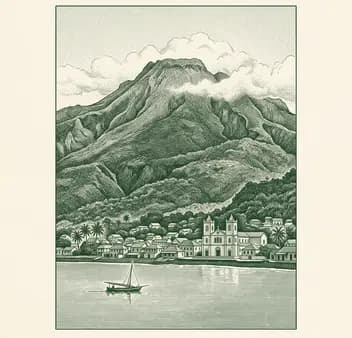
The country
Set in the heart of the Lesser Antilles arc, between Dominica to the north and Saint Lucia to the south, Martinique covers 1,128 km². A French department since 1946, it has been run since 1 January 2016 by the Territorial Collectivity of Martinique, which took over from the department and the region. Its 34 communes had 360,630 inhabitants on 1 January 2023.
In the north, Mount Pelée rises to 1,397 m: it is the island's highest point, and a volcano that is still active. On 8 May 1902, a pyroclastic flow wiped out Saint-Pierre, then the capital of Martinique. Since 2023, the "Volcanoes and Forests of Mount Pelée and the Pitons of Northern Martinique" have been on the UNESCO World Heritage List. The whole territory, land and sea, has also been a UNESCO biosphere reserve since 2021.
Good to know
Before you go
When to go
Two benchmarks exist side by side, and they do not divide the year in the same way. For Météo-France, the dry season, known as carême, runs from February to April, with 60 to 90 mm of rain a month and relatively clear skies; the rainy season, known as hivernage, runs from July to October, hotter, with more frequent and more intense showers; November to January and May to June are transition periods. The Martinique tourist board uses broader periods: carême from about December to May, hivernage from June to November. It places the busiest period from January to April and gives a sea temperature of 27 to 30°C. The hurricane season officially runs from 1 June to 30 November.
At the Le Lamentin station, average highs range from 29°C in January to nearly 32°C in September. February and March are the driest months, with about 82 mm of rain on average, and November the wettest, with 261 mm (1991-2020 normals).
Getting around
Flights arrive at Martinique Aimé Césaire International Airport, in Le Lamentin, 9 km from Fort-de-France. Metered taxis wait in the arrivals area, and car rental companies are on site. According to the tourist board, public transport leaves little freedom and a car remains the simplest way to get around; at night, the roads are often winding and unlit. In the Bay of Fort-de-France, Blue Lines sea shuttles link the capital with Les Trois-Îlets (the village and Pointe du Bout) every day. For the neighbouring islands, FRS Express des Îles ferries link Fort-de-France with Pointe-à-Pitre several times a week, and also serve Dominica and Saint Lucia.
Hozy tip
Mount Pelée can be climbed by several trails. The most popular starts from the Aileron car park, at 820 m, above Le Morne-Rouge: about 3 hours out and back to the second refuge, 5 h 30 to Le Chinois, the summit, including the walk around the caldera (7.5 km and 700 m of ascent). Clouds quickly cover the summit: the tourist board advises reaching it before 10 am, checking the weather and the state of the trails, which are slippery after rain, and never setting off alone. The volcano is monitored by the Martinique observatory (OVSM-IPGP): the alert level was yellow, vigilance, on 16 October 2026. Check its latest bulletin before you go.
CITIES
Featured cities
The cities with the most places recommended by the community.
 33 places
Sainte-Anne
Landmarks · Religious sites · Nature
 24 places
Le François
Landmarks · Religious sites · Nature
 23 places
Les Trois-Îlets
Landmarks · Museums · Religious sites
 21 places
Saint-Pierre
Landmarks · Museums · Religious sites
 17 places
Fort-de-France
Landmarks · Museums · Religious sites
 13 places
Le Marin
Landmarks · Religious sites · Castles
 7 places
Le Diamant
Landmarks · Nature · Views
7 cities
All cities
Frequently asked questions
Visiting Martinique, in practice
Which cities should I visit in Martinique?
Hozy lists 7 cities in Martinique: Fort-de-France, Le Diamant, Le François, Le Marin, Les Trois-Îlets, and more. Each city offers landmarks, hidden restaurants, viewpoints and activities selected by the community.
How many days should I plan in Martinique?
A 5 to 10 day trip lets you discover 2 to 3 major cities in Martinique. For a full tour of the country, plan at least 2 weeks.
When is the best season to visit Martinique?
Two benchmarks exist side by side, and they do not divide the year in the same way. For Météo-France, the dry season, known as carême, runs from February to April, with 60 to 90 mm of rain a month and relatively clear skies; the rainy season, known as hivernage, runs from July to October, hotter, with more frequent and more intense showers; November to January and May to June are transition periods. The Martinique tourist board uses broader periods: carême from about December to May, hivernage from June to November. It places the busiest period from January to April and gives a sea temperature of 27 to 30°C. The hurricane season officially runs from 1 June to 30 November. At the Le Lamentin station, average highs range from 29°C in January to nearly 32°C in September. February and March are the driest months, with about 82 mm of rain on average, and November the wettest, with 261 mm (1991-2020 normals).
Other destinations
Explore other countries
- France94 cities
- Italy62 cities
- Spain58 cities
- Portugal48 cities
- United Kingdom38 cities
- Belgium37 cities
- Germany16 cities
- Scotland13 cities




Sources · consulted on October 30, 2026
- French Ministry of Culture, Martinique regional cultural affairs office: Martinique at a glance
- INSEE Flash Martinique no. 226: 360,630 inhabitants in Martinique on 1 January 2023
- Martinique.org (tourist board): Mount Pelée
- UNESCO World Heritage Centre: Volcanoes and Forests of Mount Pelée and the Pitons of Northern Martinique
- UNESCO Man and the Biosphere Programme: Martinique biosphere reserve
- Météo-France Martinique: the climate of Martinique
- Martinique.org (tourist board): when to visit Martinique
- Martinique.org (tourist board): how to get to Martinique
- Météo-France: an active 2021 hurricane season in the North Atlantic (official season dates)
- Météo-France: Le Lamentin-Aéro climate sheet, 1991-2020 statistics
- Martinique Aimé Césaire Airport: access
- Martinique Aimé Césaire Airport: taxis
- Martinique Aimé Césaire Airport: car rental
- Blue Lines (public sea transport): timetables
- Martinique Pro: getting there by ferry
- FRS Express des Îles: the company
- OVSM-IPGP: weekly report on the activity of Mount Pelée, 16 October 2026